
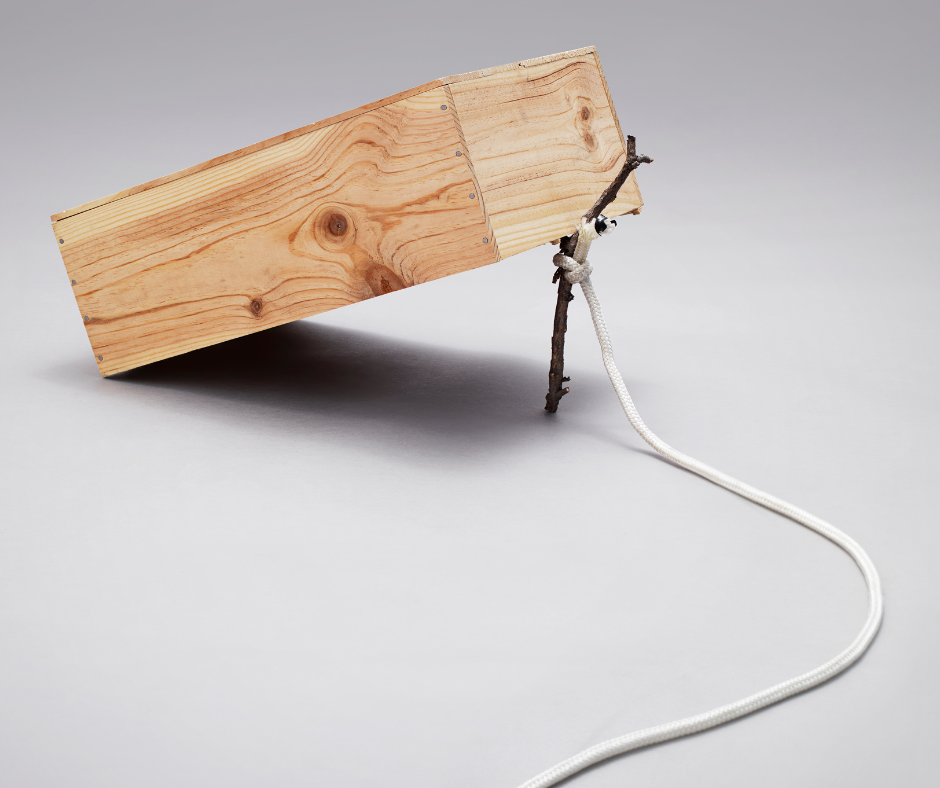
There is a word most of us use fifteen to twenty times a day, and almost nobody has stopped to examine what it actually does to us.
Try.
We use it because it sounds reasonable. Responsible, even. “I’ll try to get that to you by Friday.” “I’m trying to be more intentional about my mornings.” “We should try to get together sometime.” It signals effort without locking in outcome. And that, it turns out, is precisely the problem.
In my conversation with Carla Ondrasik — former VP at EMI Music Publishing, motivational speaker, and author of Stop Trying — she makes an observation that sounds simple until you really sit with it: trying is a mental activity. Doing is a physical one. There is no action that corresponds to trying. You can touch your nose, or you can not touch your nose. But you cannot try to touch your nose. The moment you go to do it, you’re doing it. The moment you stop, you’re not.
This isn’t wordplay. It’s a window into how much of what we call effort is actually rehearsal — the feeling of doing dressed up in the vocabulary of doing, without any of the doing actually happening.
The Safety Net We Don’t Know We’re Using
Here’s what trying does that we rarely examine: it opens a pre-built escape hatch. If I say I’ll try to meet you at nine, and I show up at nine-thirty, I have a defense ready before I’ve even decided to be late. The word already handed it to me. I tried. The Starbucks line was long. I thought we were meeting at ten. Trying doesn’t just allow for excuses — it engineers them. It builds the off-ramp before you’ve decided to take it.
Compare that to a commitment: I will be there at nine. Now there is no escape hatch. There’s only what happened and what didn’t. Accountability — real accountability — lives in that gap.
This is why Carla argues that trying has almost no relationship to actual intention. When something matters enough — when the stakes are high enough, the opportunity real enough — nobody tries. You either show up or you don’t. The word evaporates the moment the stakes become real.
The Dopamine Problem
There’s a neurological layer to this that makes the try trap genuinely difficult to escape. Talking about what you’re going to try to do releases dopamine, serotonin, and adrenaline. Your brain isn’t waiting for completion to hand out the reward — it’s handing it out for the announcement. Which means the person at every party who’s been “trying to write a screenplay” for three years isn’t just procrastinating. They’re getting actual neurochemical payoff from the story of the screenplay. The doing of it has become almost beside the point.
This is also why telling people your goals before you’ve achieved them can quietly undermine you. The reward arrives early, the motivation drains, and the goal stays theoretical. Carla’s antidote — silence, at least until the work is done — isn’t about secrecy. It’s about keeping all of that motivational energy pointed in the only direction it can actually produce something: inward, toward the work.
A Different Kind of Decision
What a no-try life actually asks of you is more uncomfortable than it first appears. It asks you to make real decisions. Not “I’ll try to get healthier” but either “I’m going to change how I eat, starting Monday” or “I’m not doing that right now, and I’m at peace with that.” Both are honest. Only one of them is what most of us say.
This is where the concept connects to something I’ve thought about a lot in the context of TimeCrafting: the difference between being productive and being productive. The first is a performance — a state of constant motion, things being tried, plates being spun. The second is something else: a relationship with your own intentions that’s honest enough to know what you’re actually going to do, and do only that.
Trying fills a calendar. Doing fills a life.
The invitation Carla extends — and it’s a real one — is to pick one small thing you’ve been trying to do, and either do it today or drop it entirely. Not because small things are all that matter, but because the pattern of completing small things is how the larger ones become possible. The junk drawer. The donation bag. The appointment you’ve been meaning to make. One thing, fully done, teaches your brain something that no amount of trying ever could: that you’re someone who does what they say.
That’s a different identity than most of us are walking around with. And it’s available the moment you stop trying to get there.