
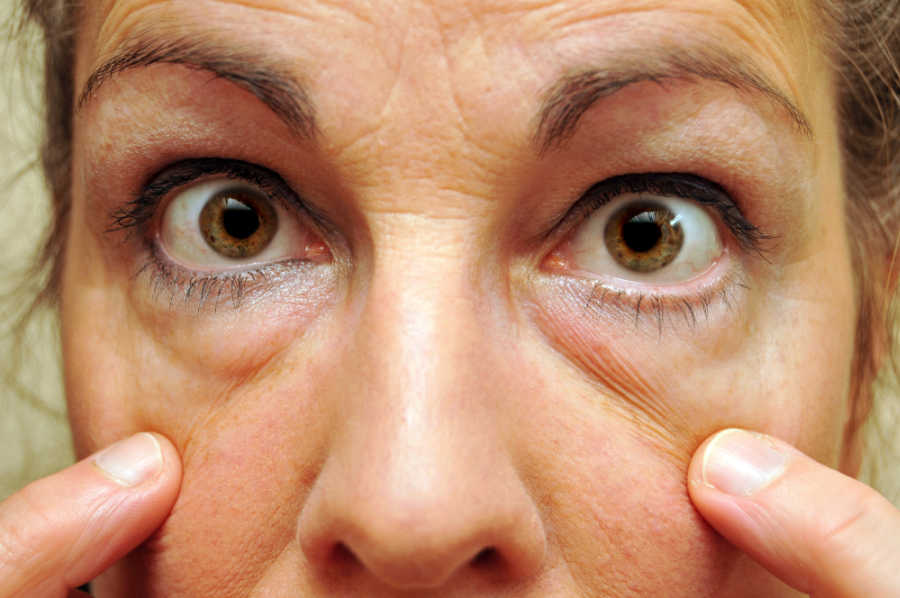
Not all “puffy eyes” are the same.
For years, I thought any puffiness around the eyes was basically the same problem. But once I started researching and testing different ways to improve my own eye area, I realized that where the puffiness sits can make a big difference.
Sometimes it sits right under the lower lashes. Other times, it shows up lower on the cheekbone as a small mound or soft fold. That’s where malar bags and festoons can get confusing.
Malar bags usually sit higher over the cheekbone and often look firmer. Festoons tend to sit a little lower on the upper cheek and may look softer, looser, or more draped.
They can both make the eye area look more tired, but they don’t always respond to the same at-home approaches. That’s why the first step is figuring out what you’re actually looking at.
✅ Quick answer
Malar bags usually sit on or just above the cheekbone. Regular under-eye puffiness sits closer to the lower lashes. Festoons often sit lower on the upper cheek and may look softer, looser, or more draped.
The location matters because each one can respond differently. Temporary fluid puffiness may improve with cold compresses, gentle massage, or instant eye tighteners like Plexaderm. But a fixed cheekbone mound usually needs a more realistic approach.
In this article, you’ll learn:
- the difference between malar bags, festoons, and regular under-eye puffiness
- what may cause cheekbone bags or swelling
- what at-home steps may help temporary puffiness
- which treatments may be worth discussing with a qualified provider
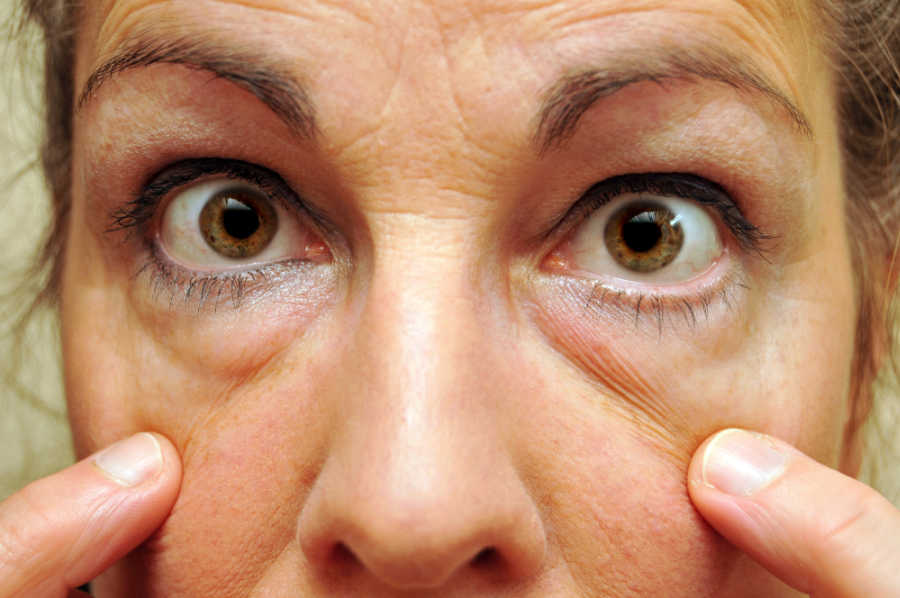
They may look similar at first, especially if you’re just thinking, “Why do my eyes look puffy?” Or maybe you’ve been searching for “bags on my cheekbones” or “cheekbone bags” because you’re not even sure what this type of puffiness is called.
That’s actually very common. Most people don’t know the terms malar bags or festoons until they start looking for answers.
But the biggest clue is location.
Regular under-eye puffiness usually sits directly below the lower lash line. Malar bags usually show up a little lower, over the cheekbone. Festoons tend to sit even lower on the upper cheek and may look more like a soft fold or drape.
So before you think about treatments, it helps to figure out where the swelling actually sits.
Let’s break down the difference between malar bags and festoons.
Quick comparison: malar bags vs festoons
At first glance, malar bags and festoons can look very similar. The biggest differences are where they sit, how they look, and what may be causing them.
Malar bags
• Sit higher on the face, just below the lower eyelid
• Usually appear as a small pouch over the cheekbone
• Often look firmer and more defined
• Commonly linked to fluid buildup and changes in the cheek fat pads
Festoons
• Sit lower on the upper cheek area
• Often appear as larger, draped or hammock-like skin folds
• Usually softer and more wrinkled in texture
• Often involve fluid retention and loose skin in the cheek area
Quick tip: If the puffiness comes and goes, is worse in the morning, or improves after a good night’s sleep or cutting back on salty foods, fluid may be part of the problem.
If the mound stays in the same spot over the cheekbone every day, it may be more structural. In that case, regular how to reduce puffy-eyes tricks usually won’t make it disappear, although they may still help reduce temporary swelling around the area.
What causes malar bags
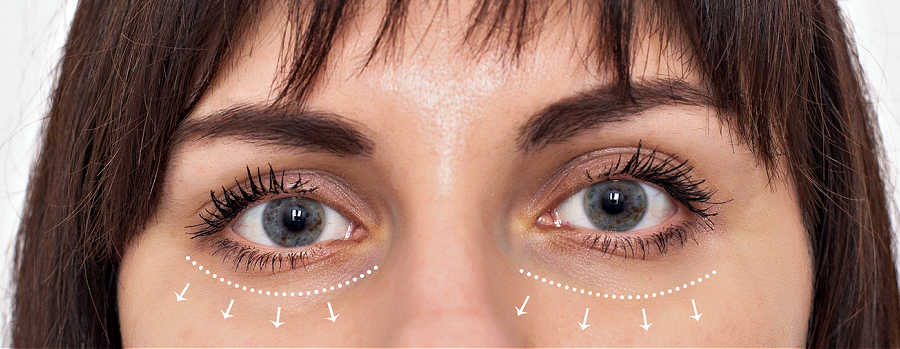
Malar bags usually form from a mix of fluid buildup, weaker skin support, and changes in the cheek fat pads.
That’s why they can be confusing. Some days the area may look puffier because of extra fluid. Other days, the mound may still be there even when the swelling has gone down.
As the skin and support tissue under the eyes become less firm, fluid can collect above the cheekbone. This can create a raised pouch or mound that looks different from regular under-eye bags.
Aging, sun damage, genetics, allergies, and fluid retention may all play a role. So if your malar bags look worse after poor sleep, salty foods, allergies, or a puffy morning, fluid may be making them more noticeable.
Location: Malar bags usually appear just below the lower eyelid and above the cheekbone.
Appearance: They often look like a small raised pouch or mound over the cheekbone.
Texture: Malar bags may look firmer and more defined than festoons.
What causes festoons under eyes?
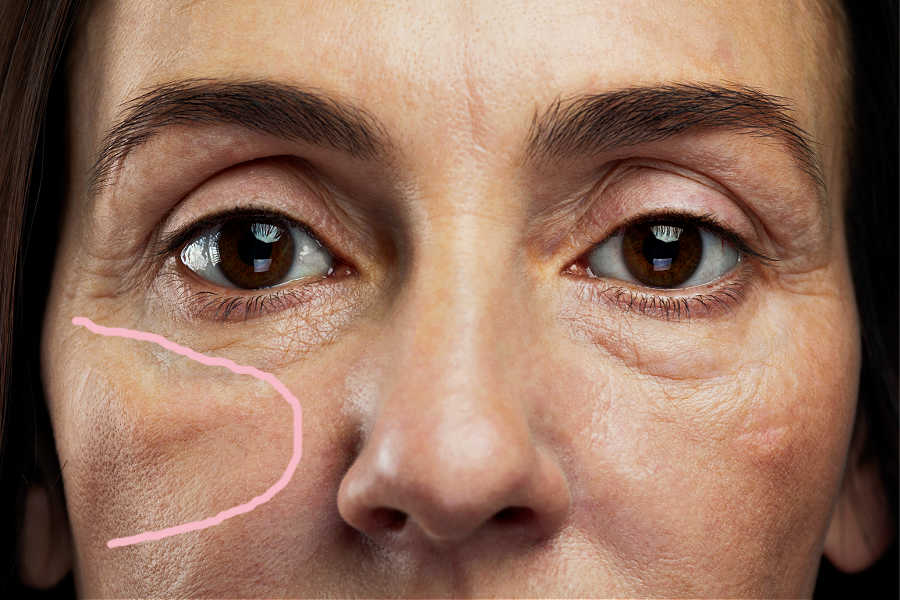
Festoons can have some of the same causes as malar bags, but they usually involve more loose skin and less support tissue of the upper cheek.
As we age, over time, the skin and tissues under the eyes naturally lose some firmness. When this happens, it can cause the area (where the lower eyelid meets the upper cheek) to look looser or develop a soft fold.
Like malar bags, festoons may look worse some days than others. Poor sleep, allergies, fluid retention, or irritation can make them appear puffier, even though the underlying loose skin is still there.
That’s one reason festoons can be frustrating. You may wake up looking puffier one morning and better the next, but the fold itself often doesn’t completely disappear.
Location: Festoons usually appear where the lower eyelid meets the upper cheek and may extend into the mid-cheek area.
Appearance: They often look softer, looser, and more draped than malar bags, almost like a small fold or hammock.
Texture: Festoons usually look softer, looser, or more wrinkled than malar bags.
Note: One thing that helped me understand the difference is realizing that not every kind of puffiness is caused by fluid.
Sometimes swelling is mostly fluid and improves during the day. Other times, loose skin, changes in the fat pads, or the natural aging of the support tissues are playing a bigger role.
That’s why regular puffy-eye tricks may help reduce temporary swelling, but they usually won’t completely smooth the folding skin or cheekbone mound.
Preventing malar bags and festoons
You can’t always prevent malar bags or festoons, especially if genetics, facial structure, or normal aging are part of the picture.
But you can often reduce some of the things that make them look puffier or more noticeable.
1. Protect the skin from sun damage
Sun damage weakens collagen and makes the thin skin around the eyes and cheeks less firm over time. Daily sunscreen is one of the simplest ways to help protect the thin skin around your eyes and cheeks as you age.
2. Watch swelling triggers
Salt, alcohol, poor sleep, allergies, and dehydration can all make the under-eye and cheek area look puffier. I’ve noticed that even when the underlying mound doesn’t change much, extra fluid can make the whole area look more swollen. That’s one reason it helps to pay attention to your own triggers.
3. Support skin quality from the inside
Eating a nutrient-rich diet won’t remove malar bags or festoons, but it can help support healthy skin as you age.
Bottom line: Prevention is mostly about protecting the skin and reducing extra swelling. It may help the area look better, but it usually won’t erase true malar bags or festoons.
Malar bags vs festoons: Treatments
The right treatment depends on what is causing the puffiness.
That’s the tricky part. Malar bags and festoons can involve fluid buildup, loose skin, fat pad changes, or facial structure. So the best place to start is with the least risky options first.
A simple way to think about it:
- Try to reduce temporary swelling first.
- Support the skin around the eyes and cheeks next.
Then consider a qualified medical provider if the mound is fixed, getting worse, or not responding to basic care.
Below are the main options, from at-home support to professional treatments.
Face massage
Gentle face massage may help if some of the puffiness is fluid-related. It can encourage movement in the area and may make the upper cheek look a little less puffy temporarily.
But massage will not remove true malar bags or festoons if they are caused by loose skin, fat pad changes, or facial structure.
That said, it’s still one of the easiest, lowest-risk places to start — especially if your puffiness comes and goes.
If you want a simple place to start, try the Circle Up Rub technique.
Facial exercises
Facial exercises won’t remove true malar bags or festoons, but they may help support the cheek area over time.
When the cheek muscles are stronger, the mid-face can look a little more lifted and supported. That may help the area under the eyes look better overall, especially if facial sagging is part of the issue.
This is not a quick fix for cheekbone bags, but it can be a helpful part of a firmer-looking face routine.
You can see an example in this 3-step cheek builder video.
Under-eye tightening serums
Under-eye tightening serums like Plexaderm and Peter Thomas Roth FirmX may be helpful when you want the area to look smoother for a few hours.
But this is important: these products do not treat true malar bags or festoons. They work more like a temporary cosmetic tightener, especially when puffiness or crepey texture is making the area look worse.
So they may help the skin look tighter and less puffy for a short time, but they won’t remove a fixed mound over the cheekbone.
If you’re considering products for puffiness, I tested Plexaderm and several other serums in my under-eye puffiness serum review, to see which ones worked best for me.
Topical treatments
Skincare can help the skin around the eyes and cheeks look smoother, firmer, and more refreshed.
Ingredients like retinoids, peptides, antioxidants, and gentle moisturizers may support better skin quality over time. This can be helpful if the area looks crepey, thin, dull, or tired.
But topical products will not remove true malar bags or festoons. Think of them as skin support — not a structural fix.
Bottom line: Skincare may improve the look of the surrounding skin, but it won’t erase a fixed cheekbone mound.
Botox
Botox does not remove malar bags or festoons because these puffy areas are usually not caused by muscle movement.
But in some cases, Botox may help soften crow’s feet or reduce tiny lines around the eyes. That can make the eye area look a little smoother overall, even if the cheekbone mound is still there.
So I’d think of Botox as an eye-area softener, not a true malar bag or festoon treatment.
You can also explore whether Botox helps with eye bags, depending on the cause.
Dermal fillers
Dermal fillers may help in some cases if the main issue is shadowing or a hollow transition between the under-eye area and cheek.
But fillers do not actually remove malar bags or festoons. And this is where you want to be careful: some fillers attract water, which may make swelling look worse in people who already have puffiness in this area.
So fillers are not something I’d casually try for cheekbone bags. They’re best discussed with an experienced injector who understands the under-eye and mid-face area.
You can learn more about filler for under-eye puffiness here.
PRP or PRF injections
PRP and PRF use components from your own blood to support healing, collagen, and skin quality.
Some providers use these treatments around the under-eye and cheek area when the skin looks thin, crepey, or tired. The results are usually subtle, not dramatic.
PRP or PRF may help the skin look healthier, but they should not be viewed as a guaranteed fix for true malar bags or festoons.
This is one of those options to discuss with a qualified provider, especially if you’re trying to improve skin quality without adding filler.
Laser or radiofrequency treatments
Laser and radiofrequency treatments use controlled heat to firm the skin and improve texture.
They may help if loose skin or crepey texture is making the area look worse. But they usually do not fully remove true malar bags or festoons, especially when fluid pockets, fat pad changes, or facial structure are involved.
This is also where experience matters. The skin around the eyes and upper cheeks is delicate, so it’s worth working with someone who treats this area often.
Bottom line: These treatments may improve skin quality and mild laxity, but they are not always a complete fix for cheekbone bags.
Specialist treatments
For more noticeable malar bags or festoons, some people may need a specialist evaluation.
Certain providers use treatments such as tetracycline injections for festoons. These are not used to treat an infection. They are used in a controlled way to help tighten tissue and reduce fluid pockets in selected cases.
For more advanced cases, surgical options such as lower eyelid surgery or a mid-face lift may be discussed. These procedures may help reposition tissue, tighten loose skin, or improve the cheek and lower-eye transition.
But this is not one-size-fits-all. The right option depends on whether the problem is fluid, loose skin, fat pad changes, or facial structure.
Important: If swelling is sudden, painful, one-sided, red, or getting worse quickly, don’t treat it like normal puffy eyes. It’s best to check with a qualified medical provider.
FAQ: Malar bags vs festoons
No. Malar bags and festoons can look similar, but they are not exactly the same.
Malar bags usually sit higher, near the lower eyelid and cheekbone area. Festoons usually sit lower on the upper cheek and often look softer, looser, or more draped.
Both can be confused with regular under-eye bags, but the location and texture are different.
There is no guaranteed way to permanently shrink malar bags with at-home care alone.
If swelling is part of the problem, things like better sleep, less salt, allergy control, hydration, and gentle massage may help the area look less puffy. But if the mound is caused by loose skin, fat pad changes, or facial structure, it usually needs a professional evaluation.
Malar bags may look worse when the area holds extra fluid. Common triggers include salty foods, alcohol, poor sleep, allergies, dehydration, smoking, sun damage, and general skin aging.
Gentle massage may help a little if puffiness is caused by fluid buildup.
But massage will not remove true festoons if loose skin, tissue changes, or facial structure are involved. Think of massage as temporary puffiness support, not a complete fix.
Not exactly. A malar line or malar crease is the groove that can form across the upper cheek. A malar bag is the raised pouch or mound that may sit above or near that line.
They can show up together, which is why they’re easy to confuse. If you’re looking in the mirror, ask yourself: am I seeing a raised pouch, a crease, or both?
Want More?
I share quick routines, beauty tweaks, and what’s working for me — straight to your inbox. Join the Club and get this free Cheek Shaper Video.


About the Author:
Linda Robison is an anti-aging advisor for women over 40, sharing natural methods, facial exercises, and beauty routines she’s personally tested over the years for smoother, firmer-looking skin. She spent nearly 15 years as an Anti-Aging Health Advisor at the Life Extension Foundation and has been testing facial anti-aging techniques for over 30 years, including training in Carolyn’s Facial Fitness. Her tips have been featured in GB News and Beauty Box Magazine. You can also view her background on LinkedIn. For more everyday tips follow along on Pinterest.
Found this helpful? Tap the 💙 in the bottom right corner
SHARE OR SAVE THIS 💗
SHARE OR SAVE FOR LATER: