
Below is an approximation of this video’s audio content. To see any graphs, charts, graphics, images, and quotes to which Dr. Greger may be referring, watch the above video.
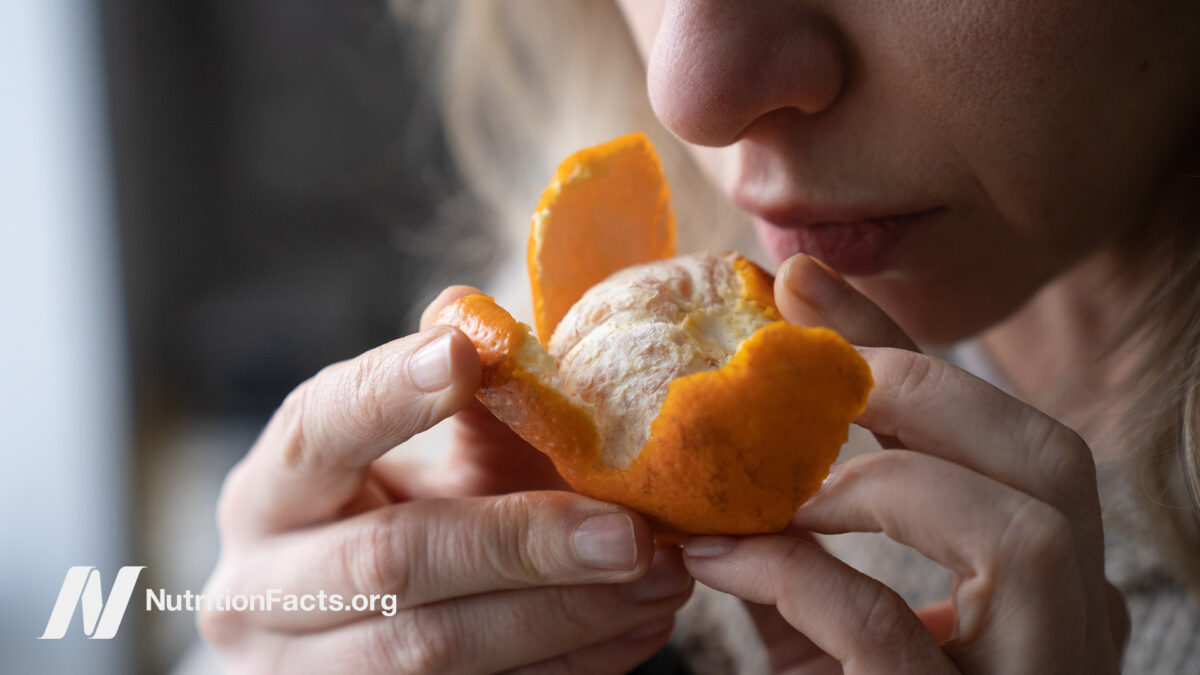
Based on a study of nearly 2,000 people, our sense of smell declines as we age, similar to our loss in vision and hearing. About a quarter of Americans over the age of 50 suffer from olfactory dysfunction—a difficulty identifying odors—which climbs to more than half of individuals between the ages of 65 to 80 years of age, and about 80 percent in those over the age of 80. And, that was before COVID-19, which affected the smell of nearly 50 percent of sufferers. Typically it was temporary, but as many as 15 percent of non-hospitalized COVID survivors were still experiencing problems with the ability to smell three or months later––and there are cases of it lasting for years.
As anyone with even a simple head cold can tell you, when you lose your sense of smell, you lose much of your sense of taste as well. Between 75 to 95 percent of what we think of as taste may actually be smell. This was all too vividly illustrated by the case of Algerian War soldiers whose tongues had been cut out remarkably reporting little loss of food and drink flavor sensation.
But hey, if loss of smell leads to loss of taste, think of all the weight loss! That was apparently the thought behind the development of a “novel nasal device,” gag-inducing silicone tubes you stick in your nostrils to cordon off your smell receptors. Researchers recorded a drop in preferences for sugary foods and beverages along with weight loss, but only among younger adults––presumably because the sense of smell of the older adults was already impaired. Making everything taste bland may help you skip a few doughnuts, but the flip side is that people with smelling difficulties tend to add more salt.
Older individuals were found to require two to three times more salt than those who were younger to achieve the same salty taste. It’s no wonder that the lifetime risk of developing high blood pressure may exceed 90 percent.
What can we do to preserve our sense of smell? Ambient air pollution is associated with olfactory dysfunction––thought to explain why nasal biopsies from residents of Mexico City, living and dead, showed more lesions and inflammatory changes than those living in low-pollution cities. We may not have a choice where we live, but there is definitely a direct source of air pollution tied to loss of smell we can all choose to avoid: cigarette smoke.
Smell loss can have serious consequences, for instance, missing a gas leak, smoke, or spoiled food. (If you have lost your sense a smell and use natural gas, please consider buying a gas detector). But, in terms of direct disability, most people who are affected don’t even to seem to be aware their smell is impaired, even when asked directly. Nearly eight out of 10 elderly individuals with smell loss thought they had normal smell sensitivity.
Hearing loss, however, is considered a major cause of global disability, ranking among the top chronic conditions affecting older adults. For far too long, though, as a National Academy of Medicine report put it, hearing loss has been “relegated to the sidelines of health care.” For those interested, check out my video series that starts with Age-Related Hearing Loss Is Not Inevitable, then a supplement shown to help, and ending with a video on dietary changes that can help, too.
Please consider volunteering to help out on the site.