Close Menu
LifeFitHaven.comLifeFitHaven.com
  • Diet & Nutrition
  • Weight Loss
  • Lifestyle
  • Mental Well-Being
  • Workouts & Exercise
  • Biohacking & Anti-Aging
What's Hot

7 Protein Mistakes You’re Probably Making (And How to Fix Them)

April 5, 2026

Happier Hour with Non-Alcoholic Drinks

April 5, 2026

noom weight epm

April 4, 2026
Facebook X (Twitter) Instagram
LifeFitHaven.comLifeFitHaven.com
  • Diet & Nutrition
  • Weight Loss
  • Lifestyle
  • Mental Well-Being
  • Workouts & Exercise
  • Biohacking & Anti-Aging
LifeFitHaven.comLifeFitHaven.com
Home»Mental Well-Being»Emotionally Unavailable Partners: Why It Ha…
Mental Well-Being

Emotionally Unavailable Partners: Why It Ha…

7 Mins Read
Facebook Twitter Pinterest LinkedIn Tumblr WhatsApp VKontakte Email
Emotionally Unavailable Partners: Why It Ha...
Share
Facebook Twitter LinkedIn Pinterest Email


Many people find themselves constantly pouring love into a relationship cup that never seems to feel full. Loving someone who is emotionally unavailable is painful and confusing, and the exhaustion that comes from trying to connect while being kept at arm’s length deserves acknowledgment.

When it comes to navigating your partner’s emotional unavailability, understand this: emotional unavailability isn’t about you. It’s a complex pattern rooted in psychology, past experiences, and deeply ingrained protective mechanisms. Let’s explore what’s really happening beneath the surface and, more importantly, how you can navigate this challenging dynamic with clarity and self-compassion.

Emotional Unavailability
Attachment Styles
Relationship Patterns
Coping Strategies

♥

The Root Causes

Why some people struggle to be emotionally present in relationships

⚠

The Warning Signs

Consistent patterns that signal emotional unavailability in a partner

✔

How to Cope

Strategies to protect your well-being and decide your next steps

What Does Emotional Unavailability Really Mean?

Emotional unavailability describes a pattern where someone consistently struggles to be present, vulnerable, or intimate in a relationship. They are emotionally distant, often reluctant to share feelings, resistant to deeper conversations, and unable to commit to the relationship’s growth.

This is different from the occasional bad day or needing space after a stressful week. We all have moments when we’re less available emotionally.

“

True emotional unavailability is consistent and pervasive. It’s the person who deflects every serious conversation, who changes the subject when things get real, or who disappears emotionally just when you need them most.

Why Are Some People Emotionally Unavailable?

Understanding the “why” doesn’t excuse hurtful behavior, but it can help you see the situation more clearly and make better decisions for yourself.

♥

Root Cause 01

Avoidant Attachment Styles

Much of emotional unavailability stems from attachment patterns formed in early childhood. People with avoidant attachment styles learned, often as children, that emotional closeness equals danger. Perhaps their caregivers were dismissive, unpredictable, or emotionally cold. To survive, they developed a protective strategy: keep people at a distance, don’t rely on anyone, and don’t be vulnerable.

As adults, these individuals often crave connection but simultaneously fear it. They may unknowingly sabotage intimacy, pulling away just as the relationship deepens because they’ve simply learned that caring hurts.

♦

Root Cause 02

Past Trauma and Relationship Wounds

Emotional unavailability often stems from unhealed wounds. Someone who’s been deeply hurt from betrayal, abandonment, abuse, or devastating loss may have walls up. Their logical response is, simply put: if I never let anyone in, I’ll never get hurt again.

Trauma affects the person who experienced it, but its ripples extend outward into their relationships. Without proper therapeutic support, these individuals may unconsciously recreate distance as a survival mechanism.

☁

Root Cause 03

Fear of Intimacy and Vulnerability

Some people are terrified of being truly known. Intimacy requires vulnerability, which means showing your imperfect, messy, authentic self to someone. For many, this feels scary, and they may fear judgment, rejection, or the loss of control that comes with deep emotional connection.

This fear often manifests as keeping conversations superficial, avoiding labels or commitment, or physically withdrawing during emotionally charged moments.

How Do I Know If My Partner Is Emotionally Unavailable?

If you’re wondering if your partner is emotionally unavailable, look for these consistent patterns:

Warning Signs to Watch For

01
They avoid discussing feelings or future plans
02
Physical intimacy exists, but emotional intimacy doesn’t
03
You feel lonely even when you’re together
04
They dismiss your emotional needs or call you “too sensitive”
05
Past relationships were all “casual” or ended due to their pulling away
06
They’re overly focused on work, hobbies, or anything that creates distance

“One instance doesn’t define a pattern. But if you’re constantly feeling like you’re chasing emotional crumbs, that’s a red flag worth examining.”

Can Emotionally Unavailable People Change?

Here’s the truth that’s both hopeful and hard: people can change, but only if they want to and are willing to do the work. Change requires self-awareness, acknowledging the problem, and a commitment to personal growth, either through therapy or another healthy avenue.

The question isn’t just “can they change?” but “are they actively trying to change?” There’s a vast difference between:

✓

Actively Working on It

Someone who recognizes their emotional unavailability and is actively working with a therapist to understand and shift these patterns

⚠

Not Making the Effort

Someone who denies the issue or expects you to accept breadcrumbs indefinitely


How Can I Cope With an Emotionally Unavailable Partner?

If you’re dealing with an emotionally unavailable partner, here are strategies to protect your well-being:
01

♦

Set Clear Boundaries

You cannot force someone to be emotionally available, but you can decide what you’re willing to accept. Communicate your needs clearly and calmly, then follow through with boundaries. If deep emotional connection is non-negotiable for you, say so.

02

♦

Stop Trying to Fix Them

As much as you may want to help, you are not their therapist. The urge to heal or save your partner is understandable but ultimately futile and exhausting. Their emotional work is theirs to do.

03

♦

Focus on Your Own Well-being

Redirect the energy you’ve been pouring into this relationship back into yourself. Reconnect with friends, pursue passions, invest in your own therapy. A relationship should add to your life, not drain it.

04

♦

Consider Couples Therapy

If both partners are willing, couples therapy can create a safe space to explore these dynamics. A skilled therapist can help the emotionally unavailable partner understand their patterns and help you both develop healthier communication.

05

♦

Know When to Walk Away

This is perhaps the hardest truth: sometimes love isn’t enough. If your partner refuses to acknowledge the problem or make any effort to change, you may need to prioritize your own emotional health. Staying in a relationship that consistently leaves you feeling unseen and unmet can erode your self-worth over time.

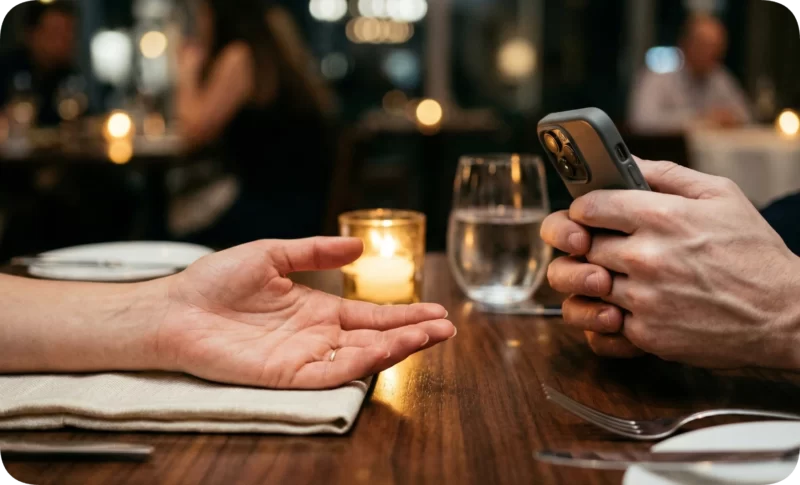
smartphone distraction emotional unavailability dinner


What If I’m the Emotionally Unavailable One?

If you’re reading this and recognizing yourself in these signs, that’s ok. Awareness is the crucial first step, and emotional unavailability isn’t a character flaw: it’s a learned protective pattern that served you once but may now be limiting your capacity for deep connection.

★

A Note on Self-Awareness

Therapy, particularly approaches focused on attachment or trauma, can help you understand where these patterns originated and develop new ways of relating. The work isn’t easy, but building capacity for emotional intimacy can transform not just your relationships but your entire life.

Take the First Step in Coping & Growing

You deserve a relationship where you feel seen, valued, and emotionally met. Whether that means your current partner commits to growth and change, or you decide to seek that connection elsewhere, trust that your need for emotional intimacy is valid and worthy of fulfillment.

If you’re struggling with this dynamic, reaching out to a therapist who specializes in relationship issues can provide the support and clarity you need to move forward with confidence and start building your emotional intelligence.

Not sure where to start? Take our quiz to find out what you’re looking for and how trained professionals at GoodTherapy can help.

You Deserve to Feel Emotionally Met

Whether you’re seeking support for yourself or looking for help with your relationship, GoodTherapy connects you with therapists who specialize in exactly this.



© Copyright 2026 GoodTherapy.org. All rights reserved.

The preceding article was solely written by the author named above. Any views and opinions expressed are not necessarily shared by GoodTherapy.org. Questions or concerns about the preceding article can be directed to the author or posted as a comment below.


Source link

Share. Facebook Twitter Pinterest LinkedIn Tumblr WhatsApp Email
Previous Article10 Best Face Pull Variations for Shoulder Health, Posture & Upper Back Strength
Next Article Sheet Pan Almond-Crusted Salmon & Green Beans

Related Posts

Mental Well-Being

AI Anxiety: How to Cope, Adapt, and Thrive …

8 Mins Read
Mental Well-Being

At Women’s Sports Bars, the Basketball Is Only the Tip of the Iceberg

3 Mins Read
Mental Well-Being

Understanding Different Types of Therapy: C…

7 Mins Read
Mental Well-Being

At-Home Devices Replacing Facials and Saunas

7 Mins Read
-Sponsored-
Don't Miss
Diet & Nutrition
Diet & Nutrition

7 Protein Mistakes You’re Probably Making (And How to Fix Them)

6 Mins Read

Nowadays, there’s no denying that protein has serious main-character energy. Thanks to the trend of…

Happier Hour with Non-Alcoholic Drinks

April 5, 2026

noom weight epm

April 4, 2026

AI Anxiety: How to Cope, Adapt, and Thrive …

April 4, 2026

Welcome to our fitness blog! We are a team of passionate fitness enthusiasts committed to sharing valuable information and tips on health, fitness, nutrition, and wellness. Join us on our journey to a healthier lifestyle!

Our Picks

AI Anxiety: How to Cope, Adapt, and Thrive …

How to Master the Barbell Strict Press: Adam Collard’s 3 Step Fix

At Women’s Sports Bars, the Basketball Is Only the Tip of the Iceberg

Catagories
  • Diet & Nutrition
  • Weight Loss
  • Lifestyle
  • Mental Well-Being
  • Workouts & Exercise
  • Biohacking & Anti-Aging
  • Privacy Policy
  • Terms and Conditions
  • About Us
  • Get In Touch
© 2026 LifeFitHaven.com

Type above and press Enter to search. Press Esc to cancel.