
Disclosure: As an affiliate partner and Amazon Associate, I earn from qualifying purchases.

Disclosure: As an affiliate partner and Amazon Associate, I earn from qualifying purchases.
If you’re trying to decide between dermaplaning and microdermabrasion, I’ve tried both at home, plus professional microdermabrasion at a spa. And I noticed some pretty big differences.
For me, microdermabrasion wins for improving the overall look of my skin. But when it comes to removing peach fuzz, dermaplaning is hard to beat.
Here’s how they compare, what surprised me about each treatment, and which one I’d choose depending on what my skin needs.

What’s the difference between dermaplaning and microdermabrasion?
Both dermaplaning and microdermabrasion exfoliate your skin, but they do it differently.
Dermaplaning uses a small blade to gently scrape away dead surface skin cells and fine facial hair (peach fuzz). That’s one of its biggest advantages. Microdermabrasion doesn’t remove facial hair the same way.
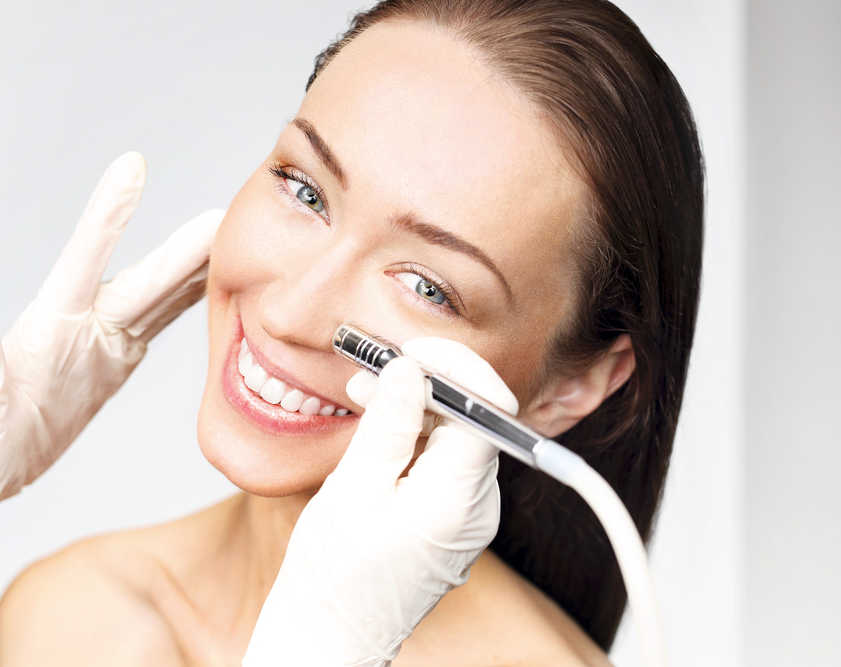
Microdermabrasion uses an exfoliating tip, disc, or fine crystals to remove dead surface skin cells. Most machines also use suction to lift the skin toward the exfoliating surface and remove loosened debris.
Both can leave your skin looking smoother and fresher, but they aren’t interchangeable.
Here’s a quick comparison:
| What it does | Dermaplaning | Microdermabrasion |
|---|---|---|
| Removes peach fuzz | Yes | No |
| Exfoliates dead skin | Yes | Yes |
| Helps rough texture | Yes | Yes |
| Can brighten dull-looking skin | Yes | Yes |
| May cause temporary sensitivity | Yes | Yes |
| Available at home | Yes | Yes |
| Professional treatment available | Yes | Yes |
The better choice depends on what bothers you most about your skin and how well it tolerates exfoliation.
Dermaplaning or microdermabrasion: Which one is better?
Here’s how I’d choose between the two:
- For peach fuzz and smoother makeup application: Dermaplaning.
- For dullness and rough skin texture: Microdermabrasion.
- For a more noticeable glow: Professional microdermabrasion was my favorite.
That’s based on my experience, of course. Your skin might respond differently, especially if it’s easily irritated.
My experience with at-home dermaplaning

I mainly dermaplane at home to remove peach fuzz. You know those tiny hairs that can make your face look a little cloudy? Removing them leaves my skin looking smoother, and makeup goes on more evenly, too.
But here’s what surprised me. Even though my skin isn’t usually sensitive, some of my regular creams and serums, especially vitamin C, sting a little afterward.
So now I keep my skincare simple until that sensitivity settles down.
You can read more about home dermaplaning and the different tools I’ve tried.
My experience with at-home and professional microdermabrasion
I’ve tried microdermabrasion both at home with my PMD machine and professionally at a spa.
With my PMD, my skin looks and feels smoother, brighter, and a little tighter afterward.. It’s a different result from dermaplaning, which I mainly use to remove peach fuzz.
 Close up picture of rotating microdermabrasion disc of my personal microdermabrasion machine.
But the professional treatment was my favorite. My face had this beautiful rosy glow, my pores looked smaller, and my skin looked especially smooth and fresh. I loved it!
The downside was the cost, which is why I eventually bought my own machine.
If you’re curious about the differences, I’ve shared my experiences with professional microdermabrasion and my at-home PMD machine.
Can you dermaplane before or after microdermabrasion?

Yes, you can have both treatments, but I wouldn’t do them too close together.
Both remove dead surface skin cells, so combining them or doing them back-to-back could leave your skin irritated or overly sensitive.
Considering how sensitive my face feels after dermaplaning, I certainly wouldn’t rush into another exfoliating treatment!
I’d wait until my skin feels completely back to normal before considering microdermabrasion. And if you’re having professional treatments, ask your skincare provider how far apart to schedule them.
Who should avoid dermaplaning or microdermabrasion?
Neither treatment is a great idea when your skin is already irritated or inflamed.
I’d hold off if you have a sunburn, rash, broken skin, or an active skin infection.
If you have rosacea, eczema, psoriasis, or inflamed acne, check with a dermatologist before trying either treatment. Even something that seems gentle can aggravate sensitive skin.
And remember, you don’t have to exfoliate aggressively to keep your skin looking good. Sometimes a gentler approach is the better choice.
If you’re looking for other options, take a look at my gentle exfoliation guide for women over 40.
Have a question or want to share your experience?

I’d love to hear from you! Visit my Questions & Comments page to ask a question, share a tip, or tell me what’s worked for you.
Stay Connected with Me
Want to see what I’m up to? I’ll keep you posted on new products I’m trying, little tricks I’ve discovered, new finds, and a few personal updates too.

About the Author:
Linda Robison is a Certified Facial Fitness Specialist and founder of Anti-Aging Beauty Zone, where she shares practical tips, products, techniques, and at-home options for women over 40. She personally tests many of the methods she writes about.
Experience: Linda spent nearly 15 years as an Anti-Aging Health Advisor at the Life Extension Foundation and has over 30 years of experience testing facial anti-aging techniques, including training in Carolyn’s Facial Fitness. Her work has been featured in GB News and Beauty Box Magazine. You can view her background on LinkedIn and follow her on Pinterest.
Found this helpful? Tap the
♡
in the bottom right corner.
FOLLOW OR SAVE

Stay Connected with Me
Want to see what I’m up to? I’ll keep you posted on new products I’m trying, little tricks I’ve discovered, new finds, and a few personal updates too.