

Welcome to Ben Greenfield’s Weekly Roundup!
In this weekly post, I share with you my most interesting discoveries of the week, including the latest news on the fronts of fitness, nutrition, health, wellness, biohacking, and anti-aging research. I also recap my upcoming events and special announcements so you can keep up with opportunities to learn, giveaways, discounts, and more!
New Discoveries
12 Fitness & Bodybuilding “Rules” You Can Stop Believing (Here’s What a New Review Says About Cardio, Restrictive Diets & Training to Failure) 🏋️
The fitness world is packed with “rules” about building muscle, losing fat, and getting stronger. But how many actually hold up when you look at the research?
A new review published in the Strength & Conditioning Journal examined 12 common bodybuilding myths and compared them with the available evidence. A few of these might surprise you.
Myth 1: You need to constantly switch up your training to keep growing.
This one needs an important distinction, especially after the research on exercise variety I shared in last week’s weekly roundup. In a study of 22 trained lifters, changing variables like load, volume, rest periods, and muscle action didn’t produce more muscle-fiber growth than keeping them consistent. In other words, you don’t need to constantly “shock” or confuse your muscles to make them grow.
Myth 2: More exercise variety always means more muscle.
To add to myth #1 and the research I covered last week, using different exercises and angles can help stimulate growth across different regions of a muscle. But that doesn’t mean randomly swapping exercises every workout is better. The sweet spot appears to be variety within a consistent program: use movements that provide meaningfully different stimuli, but stick with them long enough to progressively overload and get stronger.
Myth 3: You have to train to failure on every set.
A 2024 meta-analysis found that getting closer to failure generally produced greater hypertrophy, but you don’t need to take every set to absolute failure. The relationship also depends on factors like load, and grinding through very high-rep sets to failure can create a ton of fatigue without necessarily giving you a proportional payoff.
Myth 4: Cardio kills muscle growth.
This fear largely traces back to Hickson’s famous 1980 study on the “interference effect.” But newer meta-analysis work paints a more nuanced picture: concurrent cardio and strength training might slightly blunt growth at the muscle-fiber level, but that hasn’t consistently translated into less whole-muscle growth. Bottom line: cardio and lifting can both stay in your program.
Myth 5: Lifting makes women bulky.
Men generally carry more muscle than women even before they start training, largely because of hormonal differences that emerge during puberty. Building a visibly “bulky” physique takes years of deliberate training. For most women, lifting challenging weights is exactly what helps create the strong, defined look they’re after.
Myth 6: You need a rigid, restrictive diet to get lean.
When calories and protein are matched, studies show that rigid meal plans don’t appear to offer a special fat-loss advantage over more flexible approaches like macro tracking. And rigid, all-or-nothing dieting can make adherence harder and contribute to a more problematic relationship with food and body image.
Myth 7: You need to eat every two to three hours to keep gaining muscle.
In one controlled study, 10 collegiate rowers ate either three or six meals per day while consuming the same calories and protein. Both approaches increased body weight, fat-free mass, and fat mass, with no significant difference between them. In other words, you don’t need to spend your entire day eating to build muscle.
Myth 8: You need protein within 30–60 minutes post-workout, or you’ll lose your gains.
The post-workout “anabolic window” isn’t nearly that narrow. Meta-analysis research suggests that total daily protein is much more important for muscle growth than slamming a shake immediately after your last set. For most people trying to maximize muscle growth, around 1.6 grams of protein per kilogram of body weight per day is a solid target.
Myth 9: You can target fat loss in one area by training it.
Spot reduction has been debated for decades, but better measurement methods haven’t supported the idea that training one body part selectively burns the fat sitting on top of it. In one study, skinfold measurements suggested localized fat loss in trained arms, while MRI showed no difference between the trained and untrained arms. So train muscles to build them, and lose body fat through your diet and activity.
Myth 10: Fasted cardio burns more body fat.
You might burn more fat during a fasted workout, but that doesn’t necessarily mean you’ll lose more body fat over time. In one four-week study of women following a calorie-restricted diet, both fasted and fed cardio produced significant fat loss, with no significant difference between groups.
Myth 11: Muscle turns into fat if you stop training.
Muscle and fat are completely different tissues. When you stop training, muscle fibers can shrink. If you’re also eating more calories than you’re burning, fat cells can expand. One doesn’t magically transform into the other.
Myth 12: Creatine is a steroid.
Not even close. Creatine is a naturally occurring compound synthesized from amino acids and also found in foods like meat and fish. It isn’t an anabolic steroid or a controlled substance. It’s also one of the most extensively studied sports supplements around, with roughly 3–5 grams per day commonly used to maintain elevated muscle creatine stores and support training adaptations.
Putting it all together, building muscle and losing fat doesn’t need to be as complicated as fitness culture makes it.
Stick with the fundamentals: train consistently, challenge your muscles, eat enough protein, manage your overall calories, and don’t let outdated “rules” make the process harder than it needs to be.
Want to separate more fitness fact from fiction? Check out some of my related articles and podcasts on building muscle, losing fat, training smarter, and optimizing performance below:
- Functional Forever: My Top Tips For Maintaining & Building Muscle, Strength, Energy, and Confidence With Age.
- Q&A 451: How To Build Muscle & Lose Fat At The Same Time, The Truth About “Natural Flavors,” Are Antioxidants Really Bad Post-Exercise & Much More!
- The Best Workouts, Biohacks & Supplements For Muscle Gain, Muscle Recovery, Muscle Maintenance & More!
- Staying Strong Forever, Research-Backed Protein Intake Recommendations, The Best Supplements For Muscle Gain & More With Dr. Gabrielle Lyon.
- Biohack Your Body For Muscle Gain & Fat Loss: Part 1 – Ben Greenfield’s Top Recommended Science, Gear & Tools For Building The Ultimate Human.
Join the Founding TRIUMPH Group Coaching Cohort—Applications Are *Now Open* 💪
For years, I’ve worked with high performers who want to cut through the endless health noise and figure out what actually moves the needle for their energy, strength, recovery, and longevity.
Now, for the first time, I’m bringing that approach into a new group coaching experience through TRIUMPH Coaching.
Applications are now officially open for the founding cohort.
As a member, you’ll join me live for one 60-minute group coaching session every month. I’ll spend about 35 minutes covering that month’s topic, followed by roughly 25 minutes of live Q&A where you can bring your own questions to the table.
Over 12 months, we’ll rotate through the areas I consider foundational for optimizing health and performance, including metabolic flexibility, strength and longevity, recovery, hormones, sleep, hormesis, nutrition, biomarkers, and aging.
And the support doesn’t stop when the Zoom call ends.
You’ll also get access to a private community, recordings of every session, and weekly engagement from the TRIUMPH team between calls.
Your first session with me will be scheduled once the founding cohort is assembled. You’ll get your date, Zoom link, and topic at least two weeks in advance.
If you want to learn directly from me each month, ask questions live, and have a team helping you put what you learn into practice, apply for the founding TRIUMPH Group Coaching cohort here.
It’s Official: Boundless Is HERE & Ready to Stream 🔥 🎬
After years in the making, Boundless: The Man Who Became Human is officially available to stream on Apple TV and Amazon.
For two decades, I measured nearly everything I could about my body and performance. I built my life around optimization, longevity, better biomarkers, and pushing the limits of what a human being could do.
And a lot of it worked.
But Boundless is about what none of those numbers could measure, and what that relentless pursuit nearly cost me.
The film follows my journey from extreme self-optimization and physical mastery to a much deeper reckoning with my family, relationships, faith, purpose, and what a life well-lived actually looks like.
Losing my father and nearly losing my family forced me to confront a question no protocol, wearable, blood test, or biohack could answer: What are you optimizing for in the first place?
So if you know me for biohacking, fitness, or longevity, you may be surprised by this film. It’s ultimately less about mastering your body and more about everything that mastery can’t reach.
Watch Boundless: The Man Who Became Human now on Apple TV or Amazon.
This Week in Health & Performance: What the Latest Research Says
☕⚡ Caffeine + Taurine: Better Together for Power? Low-dose caffeine or taurine alone might not do much for power, but combining them could be a different story. In a randomized crossover trial of 32 trained male athletes, researchers tested 2 mg/kg of caffeine, 10 mg/kg of taurine, both together, or placebo. The combo increased average power compared with caffeine alone and placebo and also improved handgrip strength versus placebo, although peak power and cognitive performance didn’t change. (full study here).
☕🔥 How Much Caffeine Before a Workout for Maximum Fat Burning? In a small study of sedentary young women with overweight or obesity, 3 and 5 mg/kg of caffeine both increased fat oxidation during 40 minutes of exercise performed at the intensity that maximized fat burning. The 5 mg/kg dose produced a larger boost, but it also increased heart rate and blood pressure, while 3 mg/kg didn’t. The researchers therefore landed on 3 mg/kg as the better balance between fat oxidation and cardiovascular effects in this group. For an 80 kg (176-pound) person, that’s about 240 mg of caffeine. (full study here).
🧠💨 Could Cleaner Air Make Your Brain Work Faster? In a randomized crossover study of 119 adults living near major highways, participants used either a real HEPA air purifier or a sham purifier at home for one month. Among those 40 and older, people completed a test of executive function and mental flexibility about 12% faster after using the HEPA filter. Interestingly, the researchers note that the magnitude was similar to cognitive improvements seen with increasing daily exercise. (read more here).
🥩💪 Cutting Calories? More Protein May Help Protect Your Muscle: A new systematic review and meta-regression of 29 studies looked at resistance-trained people losing fat while in a calorie deficit. The researchers found a greater than 97% probability that higher protein intake was associated with more favorable changes in fat-free mass, with the relationship appearing stronger in leaner individuals, men, and interventions lasting longer than four weeks. Protein intakes across the research ranged quite high, reinforcing that when you’re cutting calories and trying to hang onto muscle, protein is key. (full review here).
Key Takeaway: Your pre-workout stack, the air you breathe, and the amount of protein you eat can all influence performance and recovery in ways you might not expect. Caffeine and taurine may work better together, more caffeine isn’t necessarily better for fat oxidation, cleaner indoor air may give your brain a boost, and higher protein becomes especially valuable when you’re cutting calories but want to hold onto hard-earned muscle.
Want to dive deeper? Click the links above to explore the research, and click here to follow me on X for all the latest health and performance news hot off the press!
Product Of The Week
::: Stock Up for Cold & Flu Season: Get 50% Off Hiya Kids + Teen Vitamins 🧒💪🍊:::
If you’re a parent, you know how this time of year goes: the group chat basically becomes a running tally of whose kid is out sick this week. And with the holidays, travel, school concerts, sports, and everything else piling up, supporting your kids’ nutrition becomes even more important.
That’s one reason I like Hiya’s Daily Multivitamin for kids ages 2 and up.
Hiya worked alongside pediatricians and nutrition scientists to formulate it around common nutritional gaps in kids’ diets, packing 15 essential vitamins and minerals, including vitamins D, B12, C, zinc, and folate, plus a blend of 12 organic fruits and vegetables into a chewable with zero added sugar.
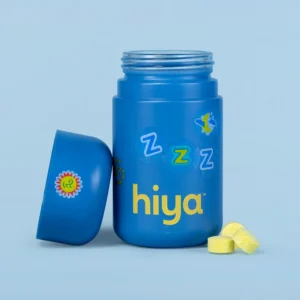
The formula is non-GMO, vegan, dairy-free, gelatin-free, and nut-free, and Hiya puts its products through third-party testing for heavy metals and contaminants.
Your first online order also comes with a reusable bottle and stickers kids can use to decorate it, followed by convenient monthly refills.
And if you’ve got teens in the house, Hiya just launched a Teen Daily Multivitamin specifically for ages 13 and up. It goes beyond increasing the dose of the kids’ formula and is made to support the next stage of growth, with 15+ vitamins and minerals, methylated forms of B12, B6, and folate, myo-inositol, and vitamin D3 paired with K2 to support bone health.
It’s also zero sugar, sweetened with monk fruit, and comes with the same refillable bottle and decal pack.
Podcasts I Recorded This Week:

How To Microdose GLP-1s Correctly: Lose The Fat, And KEEP The Muscle, With Dr. Tyna Mooree

The Longevity Masterclass: Biological Age, Mitochondrial Repair & The Superhuman Protocol
The Latest Content I Was Featured On This Week:
A 20 Year Biohacker on What Works, What He Quit, and What Even He Won’t Vouch For | Men’s Fitness
Am I Biohacking? ft Ben Greenfield | The Golden Hour #203 w/ Chris D’Elia & Erik Griffin
Ben Greenfield: After 20 Years of Biohacking, Here’s What Actually Matters! | The Bossticks
He Sent His Kids Off Into the Wilderness At 16 | Momentum Shift w/ Antonio Vaglica
Why And How To Max Out Every Area Of Your Life | Myron Golden
Biohacking Isn’t the Answer — Ben Greenfield | B Dr Elie
Master Biohacker Teaches Me the Secrets to Optimization | Bryan Callen
Health Hacks Big Pharma Doesn’t Want You To Know — Biohacking Roundtable | Modern Wisdom
My Article Feed:
My full article feed and all archives of my articles are here.
This Week’s Most Popular Instagram Post:
 Boundless Life Podcast logo below.” width=”628″ height=”919″ />
This Week’s Most Popular Tweet:
This Week’s Most Popular Facebook Post:
Cheers,
Ben