
Welcome to Ben Greenfield’s Weekly Roundup!
In this weekly post, I share with you my most interesting discoveries of the week, including the latest news on the fronts of fitness, nutrition, health, wellness, biohacking, and anti-aging research. I also recap my upcoming events and special announcements so you can keep up with opportunities to learn, giveaways, discounts, and more!
New Discoveries
Joe Rogan and I Just Had Our Blood “Oil Changed” at Ways2Well + The Real Differences Between Plasmapheresis, Dialysis, Young Blood, and More 🩸
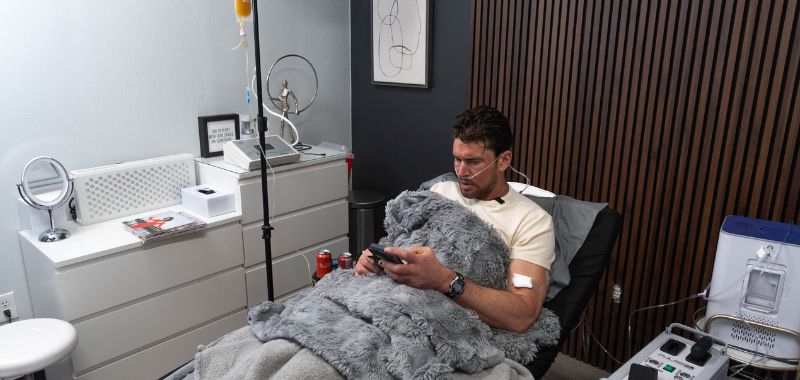
A lot of you had questions after I posted about my recent plasmapheresis treatment at Ways2Well in Austin, Texas (you can also listen to my podcast with founder Brigham Buhler here). Additionally, Joe Rogan’s Instagram post last week about his own experience there sparked even more inquiries.
Let me clear a few things up, because if you scroll the comments of our social media posts, you’ll see dialysis, plasmapheresis, plasma exchange, and “young blood” treatments all getting lumped together, and they are very different things.
Let’s start with hemodialysis. This is a kidney support machine that filters waste, fluid, and electrolytes when your kidneys can’t keep up. About 519,000 Americans use it, usually three times per week for four hours at a time. It keeps people alive, but it doesn’t restore kidney function, and it isn’t something you’d use for performance or longevity.
Now let’s get into plasmapheresis, which is where things become more interesting. Plasmapheresis just means separating plasma from blood cells outside the body. There are two main ways this is done, centrifugation and membrane filtration, and they lead to very different outcomes.
Centrifugation spins your blood, similar to an old milk separator, to divide it into red cells, white cells, platelets, and plasma. This method is widely used in hospitals, with more than 30,000 large-volume exchanges each year across 450+ centers in the U.S., treating over 85 conditions.
Membrane filtration takes a different approach, using filters to remove specific molecules and then returning your own plasma back into the body with no replacement fluid needed, making it a more targeted technique. Cascade filtration and LDL apheresis are two examples of this method.
Therapeutic plasma exchange, or TPE, is the clinical term for plasmapheresis, and it is what has been getting attention lately, including what Rogan and I both did at Ways2Well.
TPE removes about 3 to 4.5 liters of your plasma and replaces it with saline, albumin, and sometimes immunoglobulins. It was originally designed for serious autoimmune conditions, but it’s been explored seriously in longevity circles, and my own pre/post labs tell an interesting story, including a big drop in liver enzymes indicating lowered liver inflammation, a large decrease in ferritin also indicating decreased overall inflammation, a significant cleanup of lipids (likely why my plasma was so viscous and thick), a decrease in Hs-CRP, and a much lower thyroid peroxidase antibody count indicating reduced autoimmune activity against the thyroid gland.
After the procedure, I also received an IV infusion of stem cells and exosomes to further reduce inflammation and enhance regenerative potential.
Here’s what most people don’t think about: your plasma isn’t just liquid. It’s loaded with biology, including over 10,000 detectable proteins, thousands of peptides, dozens of hormones, inflammatory cytokines, and billions of exosomes per milliliter carrying signaling molecules, growth factors, and nucleic acids.
When you remove and replace it with saline, all of that goes with it unless you add something back. This is basically an oil change for the body, and it works best when you refuel with the right things afterward.
There’s also small-volume plasma exchange, which is a different category entirely. When you remove less than a liter, your body rebuilds what’s lost within about 48 hours. This approach has decades of safety data behind it, with over 78 million procedures performed each year in plasma donation settings.
Then there’s young fresh frozen plasma, or yFFP, which is the one that really gets people talking (for more insights, you can check out my podcast with Dr. Khanh Nguyen here). This is plasma from healthy donors aged 18 to 25, collected at peak physiological function, frozen, and matched to the recipient. More than 1,000 human treatments suggest it can trigger regenerative signaling in older individuals. I’ve done this myself at Austin Regenerative Therapy, and in some ways, it goes beyond TPE. That said, since it involves donor biologics, some people prefer TPE combined with added compounds like exosomes or stem cell derivatives.
Here’s a quick breakdown so you don’t mix these up:
- Hemodialysis: Kidney support for organ failure
- Membrane filtration: Removes specific molecules, returns your own plasma
- Centrifugation apheresis: Separates blood components, used across many diseases
- TPE: Large-volume plasma replacement, originally for medical conditions, now explored for longevity
- Small-volume exchange: Well tolerated, body rebuilds quickly
- yFFP: Young donor plasma with regenerative signaling
I’ve spent years researching this space, talking with clinicians, and trying these protocols. For more information, you can start with these additional resources:
This Week in Health & Performance: What the Latest Research Says
🏋️♂️ Light Weights, Same Gains?: A new study shows that lighter weights can build similar muscle as heavier loads, as long as you train to true muscular failure. The takeaway is that effort and intensity matter more than the number on the bar (study).
🥜 Airport Snack That Actually Delivers: What’s the healthiest nut? Pistachios stand out as a widely available, nutrient-dense option, considering they’re rich in antioxidants that support heart health and recovery. Not a bad grab, even if you’re paying airport prices (read more).
🏃♂️ Are Some People Built to Run?: Research suggests competitive runners may carry specific collagen gene variants linked to a lower risk of soft-tissue injuries, which could partly explain why some athletes stay more resilient under high training loads (read the study).
🎽 Weighted Vests vs. Strength Training: While weighted vests can add intensity to movement, they don’t replace traditional resistance training when it comes to building muscle and strength. Progressive overload still matters (full study here).
Key Takeaway: Whether it’s lifting lighter, choosing smarter snacks, or understanding your genetics, performance comes down to applying the right stimulus consistently, not chasing extremes.
🔗 Want to dive deeper? Click the links above to explore the research, and click here to follow me on X for all the latest health and performance news hot off the press! 🚀
Product Of The Week
::: Save 25% on Shilajit Gummies for Natural Energy Support :::
Feeling more exhausted than usual?
It’s easy to blame a busy season, aging, or harder training. But mineral shortfalls are far more common than most people realize and can be underlying causes of fatigue.
Soil depletion, processed diets, and poor absorption mean many people aren’t getting enough key minerals like magnesium, iron, zinc, copper, and selenium, all essential for oxygen transport, muscle contraction, hormone balance, and mitochondrial energy production.
That’s why Organifi created their Pure Himalayan Shilajit Gummies.
Sourced from high-altitude Himalayan rock and purified for safety and potency, they deliver over 40 trace minerals along with fulvic and humic acids to help transport nutrients into your cells.
They include 250 milligrams of a clinically studied shilajit extract that supports energy, vitality, and mitochondrial ATP production, while also helping with recovery, endurance, and overall resilience. Fulvic acid also helps bind to toxins and support detoxification, plus the formula is thoroughly tested for heavy metals.
If your goal is to support energy at the source, you can use code BEN here to save 25% off for the next 48 hours.
Podcasts I Recorded This Week:


The Latest Content I Was Featured On This Week:
My Article Feed:
My full article feed and all archives of my articles are here.
This Week’s Most Popular Instagram Post:
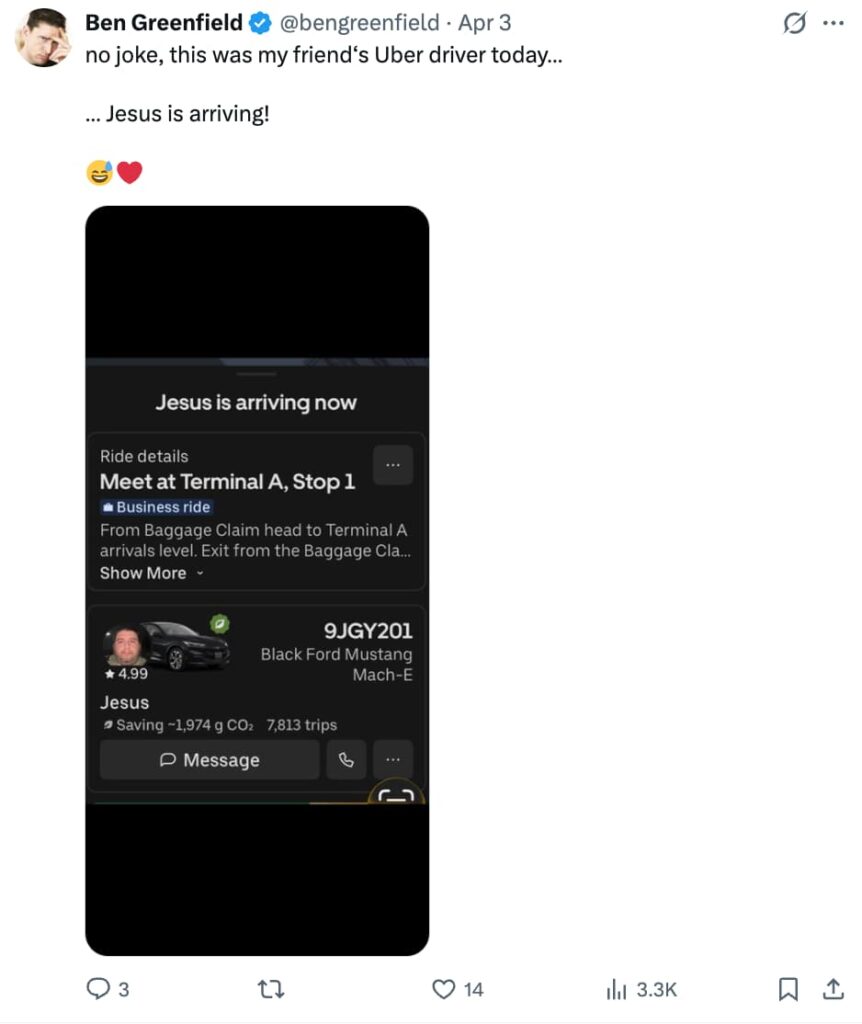
This Week’s Most Popular Tweet:
This Week’s Most Popular Facebook Post:
![Screenshot of a Facebook post by Ben Greenfield Fitness, verified with a blue checkmark, posted April 4 at 6:37 PM with a public audience setting. The caption reads: "Two weeks ago in Austin, I visited Ways2Well and had a fascinating and VERY eye-opening conversation with founder Brigham Buhler. In this conversation, be prepared to b… See more." The post contains a side-by-side video still of two men seated in gray armchairs in a dark, dramatic studio setting with a small round table between them holding two green glass bottles. On the left, a man wearing a white cap, black sleeveless tank top, tan pants, and visible arm tattoos sits listening with hands clasped. On the right, a bald man with a dark beard, heavily tattooed arms, and a dark graphic t-shirt gestures with both hands while speaking. Subtitles read: left panel — "Why does the healthcare [system]…"; right panel — "The problem with the healthcare system is that it's a sick care system that is monetizing chronic disease. And insurance companies are one of the key players in this. Insurance companies are not there to keep you healthy and prevent…" The post shows 4 likes, 0 comments, and 2 shares.](https://bengreenfieldlife.com/wp-content/uploads/2026/04/Screenshot-2026-04-06-at-6.29.25-PM.jpg)
Cheers,
Ben