
Recipe tips and FAQs
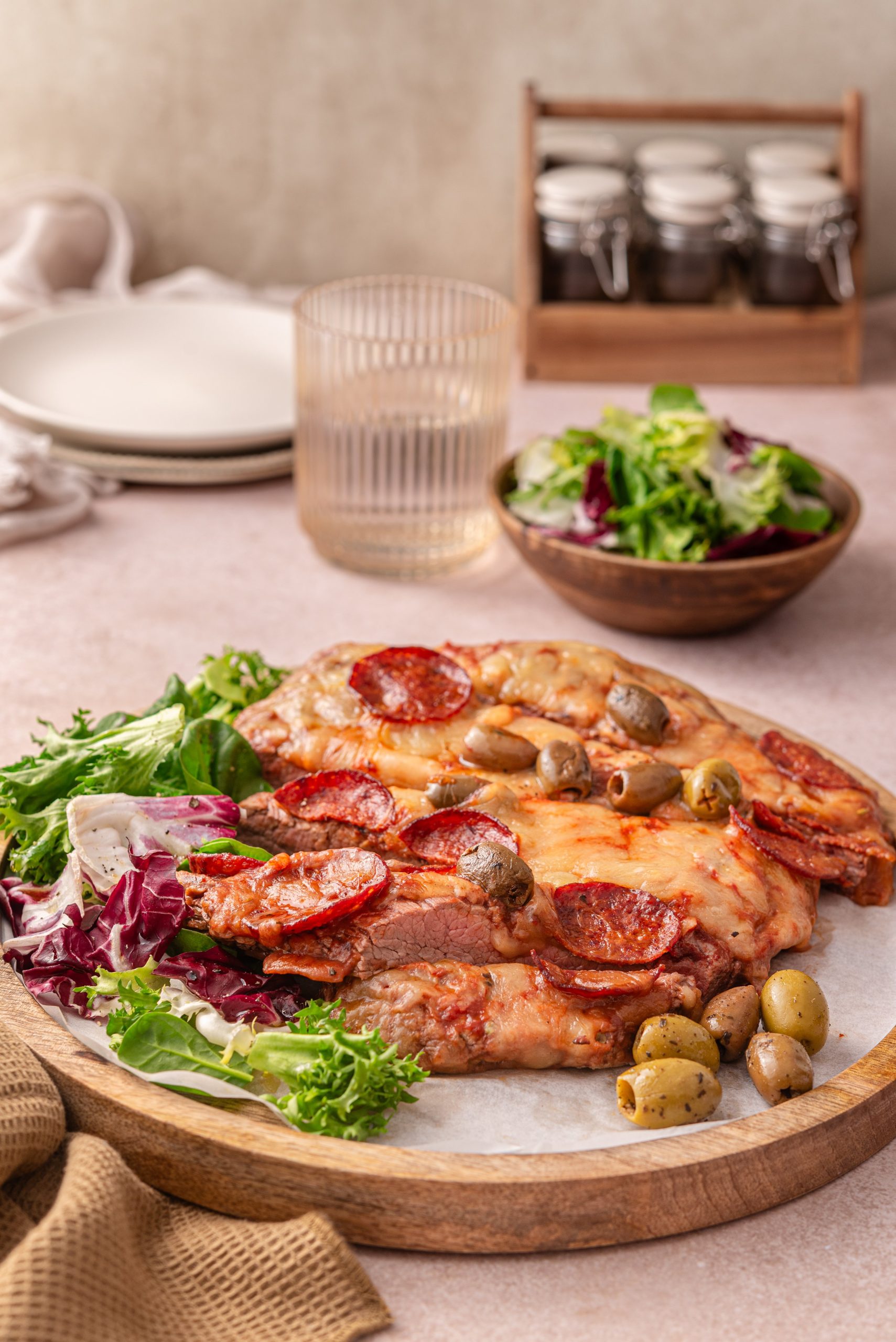
What is matambre a la pizza?
Matambre a la pizza, also known as matambre a la pizzaiola, is a popular Argentinian dish that combines beef with classic pizza toppings.
Traditionally, it’s made with a thin cut of beef called matambre, which comes from between the skin and ribs of the animal. The meat is often tenderized or precooked before being topped with tomato sauce, mozzarella, oregano, and other pizza-inspired ingredients.
This version uses flank steak, which is easier to find in many countries, and a quicker cooking method.
Can I use a different cut of beef?
Yes! Flank steak works well because it’s relatively thin and has a pronounced beefy flavor.
Skirt steak is another good option, although it generally cooks faster and should be watched carefully.
You can also use a thinly sliced sirloin steak.
If using a thicker cut, adjust the cooking time accordingly and use a meat thermometer to avoid overcooking.
Can I marinate the steak in milk?
Yes! Soaking beef in milk is sometimes used in traditional preparations of matambre.
If you’d like to try it, place the steak in a shallow dish and cover with whole milk. Add a couple of crushed garlic cloves and bay leaves, then cover and refrigerate for 6–12 hours.
Discard the milk and aromatics, and pat the steak thoroughly dry before seasoning and cooking.
The milk can mellow the flavor and infuse the meat with garlic and bay leaves, although it does not reliably tenderize tough cuts of beef.
How do I prevent the steak from becoming tough?
Flank steak is naturally lean and has long muscle fibers, so it can become chewy if overcooked or sliced incorrectly.
For the best results:
Choose a relatively thin, evenly sized steak.
Pat the meat dry before searing to achieve a good crust.
Sear briefly over high heat.
Finish under the broiler just long enough to melt the cheese.
Let the steak rest before slicing.
Always slice thinly against the grain.
For a medium-rare result, aim for an internal temperature of approximately 130–135°F (54–57°C). Note that USDA food-safety guidance recommends cooking whole cuts of beef to 145°F (63°C) followed by a 3-minute rest.
What if my steak is thicker than recommended?
If your steak is 1 inch (2.5 cm) thick or more, it may need additional cooking time.
Instead of relying on a fixed time, use a meat thermometer to check the internal temperature.
If the topping is browning too quickly, switch from broil to a regular oven setting at 400°F (200°C) until the steak reaches your preferred doneness.
Can I use another cheese instead of mozzarella?
Absolutely! Mozzarella is the classic choice because it melts beautifully and has a mild flavor that complements the beef and tomato sauce.
For a stronger cheese flavor, try provolone, Gruyère, or sharp cheddar.
You can also combine mozzarella with a little grated Parmesan for extra flavor.
Can I replace the pepperoni?
Yes! Pepperoni adds a spicy, smoky flavor, but there are plenty of alternatives.
Try sliced salami, cooked bacon, chorizo, or thinly sliced ham.
For a more traditional Argentinian-inspired version, use mozzarella, tomato sauce, oregano, and olives without pepperoni.
What other pizza toppings can I add?
This dish is easy to customize with your favorite low carb pizza toppings.
Try sliced mushrooms, roasted bell peppers, red onion, or fresh basil.
For a little extra heat, add crushed red pepper flakes or sliced jalapeños.
Avoid adding too many toppings, especially ingredients that release a lot of moisture, as they can prevent the cheese from browning properly.
Can I make matambre a la pizza ahead of time?
You can prepare the steak and toppings in advance.
Trim the steak, shred the cheese, slice the olives, and prepare the salad dressing ahead of time.
If you choose to marinate the steak in milk, it can be refrigerated in the marinade for 6–12 hours.
For the best texture, sear and finish the steak shortly before serving.
Can I cook this without an oven-safe skillet?
Yes! Sear the steak in a regular skillet, then transfer it to a baking dish or oven tray.
Add the pizza toppings and place it under the broiler until the cheese melts and begins to bubble.
Keep in mind that transferring the steak may slightly affect the cooking time.
Can I serve matambre a la pizza with chimichurri?
Absolutely! Chimichurri is a classic Argentinian sauce made with parsley, garlic, olive oil, vinegar, and herbs.
Its fresh, tangy flavor works beautifully with the rich beef and melted cheese.
Serve a little chimichurri on the side or drizzle it over the steak just before serving.
Is matambre a la pizza keto-friendly?
Yes! This version replaces traditional pizza dough with beef, making it naturally low in carbohydrates and rich in protein.
The mozzarella, pepperoni, and olives add flavor and fat, while the green salad provides a fresh contrast.
Choose unsweetened tomato sauce and check the pepperoni label for added sugar or starches.
Storage and leftovers
Store leftover steak and toppings in an airtight container in the refrigerator for up to 3–4 days.
Reheat gently in the oven at 300°F (150°C), covered loosely with foil, until thoroughly heated. Avoid prolonged reheating, as flank steak can become dry and chewy.
Store the salad separately and dress it just before serving.
Freezing is possible, but the texture of the steak and cheese may change slightly after thawing.