
Welcome to Ben Greenfield’s Weekly Roundup!
In this weekly post, I share with you my most interesting discoveries of the week, including the latest news on the fronts of fitness, nutrition, health, wellness, biohacking, and anti-aging research. I also recap my upcoming events and special announcements so you can keep up with opportunities to learn, giveaways, discounts, and more!
New Discoveries
Does Watching Porn Actually SHRINK Your Brain? Here’s What the Latest Research Says 🧠🔥
Could frequent exposure to highly stimulating sexual content change your brain’s structure and make everyday pleasures feel flatter over time?
New brain-imaging research points in that direction.
A study published in JAMA Psychiatry looked at 64 healthy men and compared how much pornography they watched with their brain structure, brain activity, and communication between brain regions. The men who reported watching porn more often tended to show:
- Less gray matter in the right caudate, a region tied to reward, motivation, and learning
- Lower activity in the left putamen, another reward region, in response to sexual images
- Weaker connectivity between the reward system and the prefrontal cortex, which helps regulate decision-making and self-control
The researchers proposed that repeated porn exposure might gradually dull your brain’s response, so you could need more intense or novel content to get the same reward.
This is called desensitization, and similar changes in reward processing have been found in people with substance addictions.
We can’t say for sure that pornography shrinks your brain. Men with certain brain traits might simply be drawn to porn more, and since the scientists measured participants at a single point in time, they couldn’t tell which came first. Less gray matter in one region also doesn’t automatically mean brain damage.
Still, the findings raise a fair question about what happens to your reward system when stimulation is available instantly and without limit.
A section of my book Boundless explores this same question: how what you put in your body and how you spend your time can shape your brain. One example is research on how THC (tetrahydrocannabinol, the main psychoactive found in cannabis) might affect mitochondria, the energy-producing parts of your brain cells, which could potentially lower their energy output and interfere with memory formation (basically, weed and porn are two of the worst things for your brain, friends).
Ultimately, your habits can influence your motivation, reward processing, and self-control, which gives you a reason to look at them closely.
If you’re interested in learning more about protecting your brain, optimizing dopamine and motivation, and establishing habits that support long-term cognitive health, check out my related resources below:
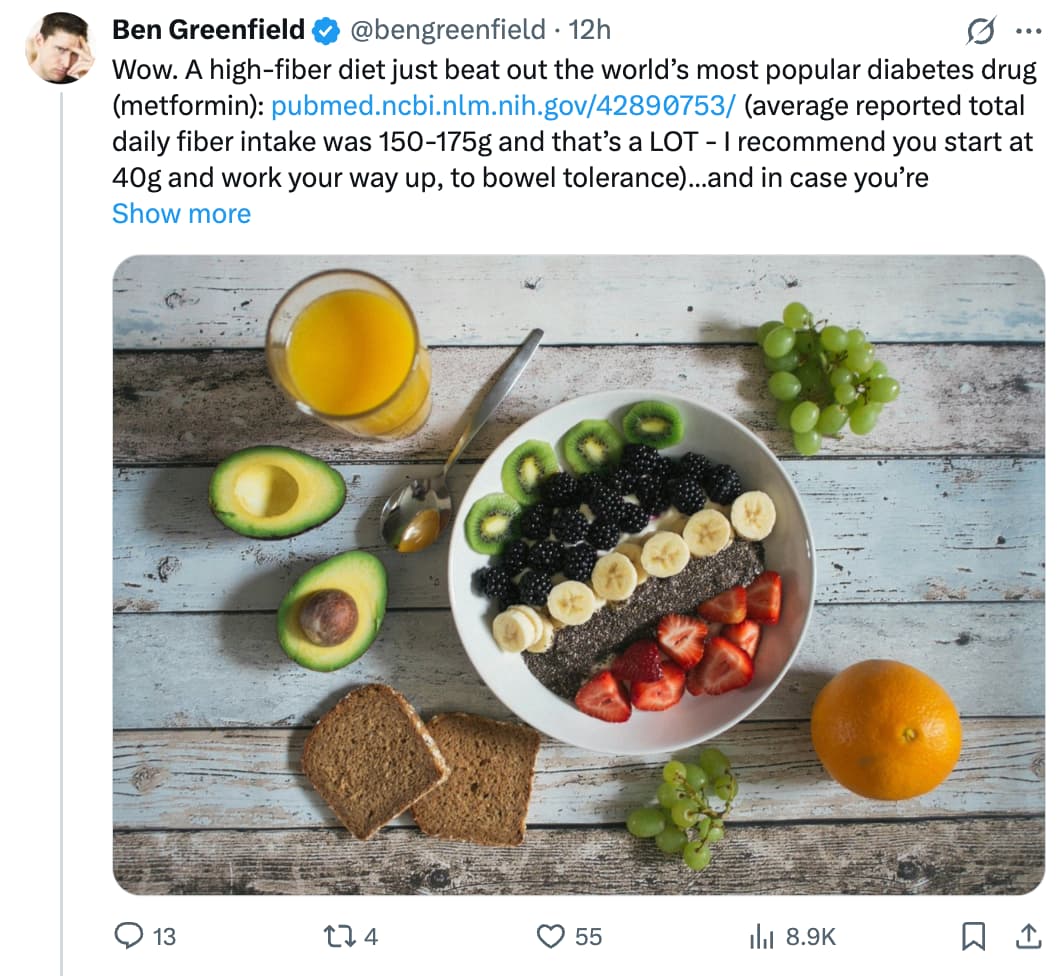
A High-Fiber Diet Just BEAT Metformin, One of the World’s Most Popular Diabetes Drugs, for Blood Sugar Control🩸
A new study compared a fiber-rich diet against metformin, one of the most widely prescribed medications for type 2 diabetes, and the high-fiber approach came out ahead.
The findings suggest that dramatically increasing your fiber intake can improve how your body handles glucose and responds to insulin.
Before you pile your plate with broccoli and beans, here’s the catch: participants reportedly ate an average of 150 to 175 grams of fiber per day, which is five to seven times the usual recommendation. How much is 150 grams? Roughly 10 cups of cooked black beans, every single day. Most adults are advised to get about 25 to 38 grams of fiber/day, depending on age and sex.
The researchers used two specific fiber formulations:
- A mix of soluble and insoluble fiber: wheat fiber, oat fiber, highland barley fiber, resistant dextrin, inulin, fructo-oligosaccharides, xylo-oligosaccharides, and konjac gum.
- A mostly soluble fiber blend: resistant dextrin, inulin, fructo-oligosaccharides, and xylo-oligosaccharides.
These fibers work in different ways. Some slow digestion and glucose absorption, while others feed beneficial gut bacteria that produce short-chain fatty acids, which can help support your metabolic health. Konjac gum salad, anyone? 🙂
Jumping straight to 150 grams a day can cause serious bloating, gas, and digestive discomfort, especially if your gut isn’t used to it. If you want to eat more fiber, aim for about 40 grams a day and build up gradually as your digestion allows. From there, you can experiment with higher amounts based on your tolerance, diet, and goals.
If you take metformin, don’t stop or change it based on this study. Talk with your healthcare provider before making any medication changes.
What you feed your gut can shape your metabolic health, and this research adds to the growing evidence that fiber can help you manage blood sugar and support healthy insulin function. You can read more about these topics here:
Precepts Is HERE: 20 Years of Hard-Won Wisdom, Written for My Sons and Now for *You* 📖
Everyone has wisdom worth sharing. The problem is, it usually dies with them.
That’s why I wrote Precepts, which is out today: 100 life lessons I gathered over 20 years for my twin sons, River and Terran, and now for you.
For decades, I’ve collected lessons about productivity, faith, purpose, and physical health, and about how to live well. Most of it was scattered across journals, sticky notes, and the margins of books. It took four years to pull it all together, and it started with one question: if I never came back, what would be left unsaid?
Precepts is built for about 10 minutes a day over 100 days. Each daily lesson includes:
- A short personal essay grounded in the real moments that inspired it
- Scripture passages, quotes, and outside citations for deeper reflection
- Probing questions with space to journal your own answers
- A QR code that links to a video reflection from me
Read it on your own, with your spouse, or as a family. These are the lessons I wanted my sons to have, and I’m glad to share them with you.
Precepts is already a #1 New Release in Journal Writing on Amazon.
You can order your copy of Precepts here.
One Coach and a Plan Built Around Your Life: Work With a TRIUMPH Coach One-on-One 💪
You can know a lot about health and still feel stuck. Podcasts, apps, and protocols often contradict each other, and it gets harder to stay consistent when life gets busy.
TRIUMPH Coaching is built on my Boundless method and delivered by my coaching team.
You work with one coach who knows you from your first call through the duration of your program, starting with a focus on foundations like sleep, strength, and real food, then adding smarter tools once the basics are in place.
Each month, you get two 1:1 video calls with your coach to review your progress, work through obstacles, and adjust your plan.

Between calls, you get weekly training, nutrition, and lifestyle programming, weekday messaging with your coach, and a quarterly deep health check to make sure you’re on track.
To start, fill out a short assessment (about 10 minutes), then talk with the coach who would work with you. They’ll tell you honestly whether TRIUMPH is a good fit.
It’s Official: Boundless Is HERE & Ready to Stream 🔥 🎬
After years in the making, Boundless: The Man Who Became Human is officially available to stream on Apple TV and Amazon.
For two decades, I measured nearly everything I could about my body and performance. I built my life around optimization, longevity, better biomarkers, and pushing the limits of what a human being could do.
And a lot of it worked.
But Boundless is about what none of those numbers could measure, and what that relentless pursuit nearly cost me.
The film follows my journey from extreme self-optimization and physical mastery to a much deeper reckoning with my family, relationships, faith, purpose, and what a life well-lived actually looks like.
Losing my father and nearly losing my family forced me to confront a question no protocol, wearable, blood test, or biohack could answer: What are you optimizing for in the first place?
So if you know me for biohacking, fitness, or longevity, you may be surprised by this film. It’s ultimately less about mastering your body and more about everything that mastery can’t reach.
Watch Boundless: The Man Who Became Human now on Apple TV or Amazon.
Already watched it? A short review on Apple TV or Amazon can help someone else find the film and decide to press play.
This Week in Health & Performance: What the Latest Research Says
♀️💪 Testosterone Isn’t Just a Male Hormone (And It’s About WAY More Than Libido): Testosterone is more involved in women’s health than you might realize. A recent review found that it contributes to bone density, muscle mass, metabolic health, blood vessel function, cognition, mood, sexual function, and reproductive health. Not every woman needs testosterone therapy, but this hormone deserves more attention beyond sex drive alone. My wife uses testosterone alongside estrogen and progesterone under the medical supervision of Brite Medical, and it’s a topic I’ve been exploring more closely (read the review here).
🍑🏋️ Want Bigger, Stronger Glutes? Stop Doing the SAME Exercises: If you’re chasing a better butt, squats alone probably aren’t going to cut it. New research comparing 10 weeks of hip extension and hip abduction training found that different movements produced different patterns of growth across the gluteal muscles. In other words, your glutes don’t all respond to training the same way! That’s a good reason to mix things up with squats, hip thrusts, lunges, cable kickbacks, and abduction exercises like clamshells to target different muscles and regions. Variety may be one of your best tools for building well-rounded glutes (full study here).
💪🧬 ONE Workout Can Change Over 3,000 Proteins in Your Body?! Think exercise is just about burning calories and building muscle? Think again. A fascinating new study in Nature Metabolism tracked changes in blood, saliva, and urine after exercise and found that a single workout affected more than 3,000 proteins involved in everything from immune function and tissue repair to metabolism. Researchers also identified exercise-responsive proteins with genetic links to cardiometabolic diseases, offering new clues about how physical activity supports long-term health. It’s pretty incredible how much is happening inside your body after just ONE workout (full study here).
⏰🏋️ Morning vs. Evening Workouts: Does Training When You’re STRONGEST Really Matter? Ever notice you can lift heavier weights in the afternoon or evening than first thing in the morning? You might assume training when you’re naturally strongest would lead to bigger gains, but new research didn’t find evidence of that. One possible explanation is that your body adapts to your regular training schedule. So, if you’re initially weaker in the morning but consistently train early, that performance gap may shrink over time. The bigger lesson? Don’t stress about finding the perfect hour to lift. Pick a time you can stick with and focus on training consistently (full study here).
Key Takeaway: Testosterone matters for far more than women’s sex drive, building better glutes may require more exercise variety, and even ONE workout triggers thousands of molecular changes throughout your body. And when it comes to strength training, consistency may matter more than whether you’re lifting at sunrise or sunset.
Want to dive deeper? Click the links above to explore the research, and click here to follow me on X for all the latest health and performance news hot off the press!
Product Of The Week
::: Regulate Your Nervous System, Don’t Just Mask the Symptoms of Stress (Save $50 on Harmoniq FLOW) 🧠⚡ :::
“Dysregulation” is one of the hottest words in wellness right now. But what does it actually mean, and why should you care?
It means your nervous system has trouble shifting gears, so you stay revved up when you want to wind down. Burnout, chronic stress, and poor sleep can leave your nervous system stuck in overdrive, which is why you can feel wired and exhausted at the same time.
You might lean on caffeine to push through your day, then reach for melatonin or another sleep aid when you can’t wind down at night. Those tools can help in the short term, but they don’t necessarily address what’s happening underneath.
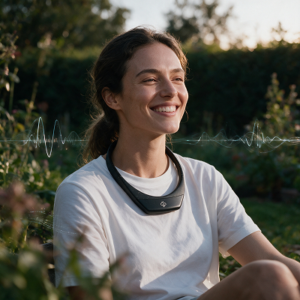
Instead of another passive tracker, Harmoniq FLOW is an active intervention. This wearable neckband uses patented ulRFE frequency technology to support nervous system regulation, going beyond just tracking stress to deliver stimulation intended to help you shift it.
Open the app, choose your state (Calm, Focus, Relief, or Sleep), and the device does the rest. That gives you a way to act on your physiology, whether you want to relax or sharpen your focus.
Of course, no wearable replaces quality sleep, movement, sunlight, and other fundamentals, and independent research on FLOW’s specific benefits is still limited. Still, it’s a solid option for supporting relaxation, focus, and stress management without another stimulant or supplement.
Podcasts I Recorded This Week:


The Latest Content I Was Featured On This Week:
Getting REAL with World-Renowned Biohacker Ben Greenfield: He’s Tried EVERYTHING to Beat Aging. Here’s What Works | Get Real With Caroline Hobby (or listen on Spotify here)
Ben Greenfield on What Kept Him Chasing the Next Ironman | State Of Mind with Maurice Benard
A very slow training session with Zac Efron | Chris Williamson
My Article Feed:
My full article feed and all archives of my articles are here.
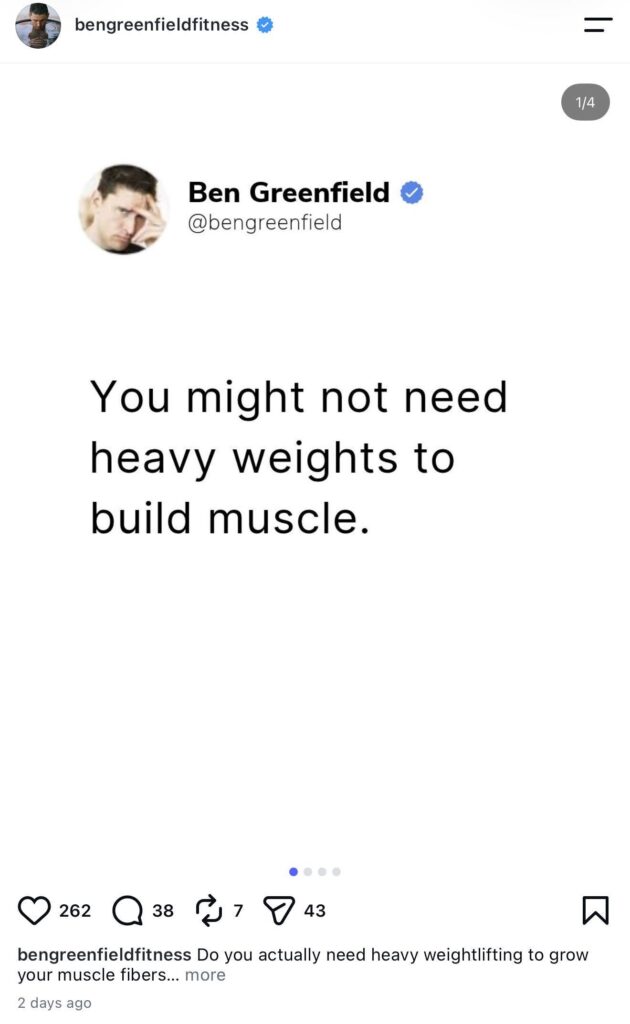
This Week’s Most Popular Instagram Post:
This Week’s Most Popular Tweet:
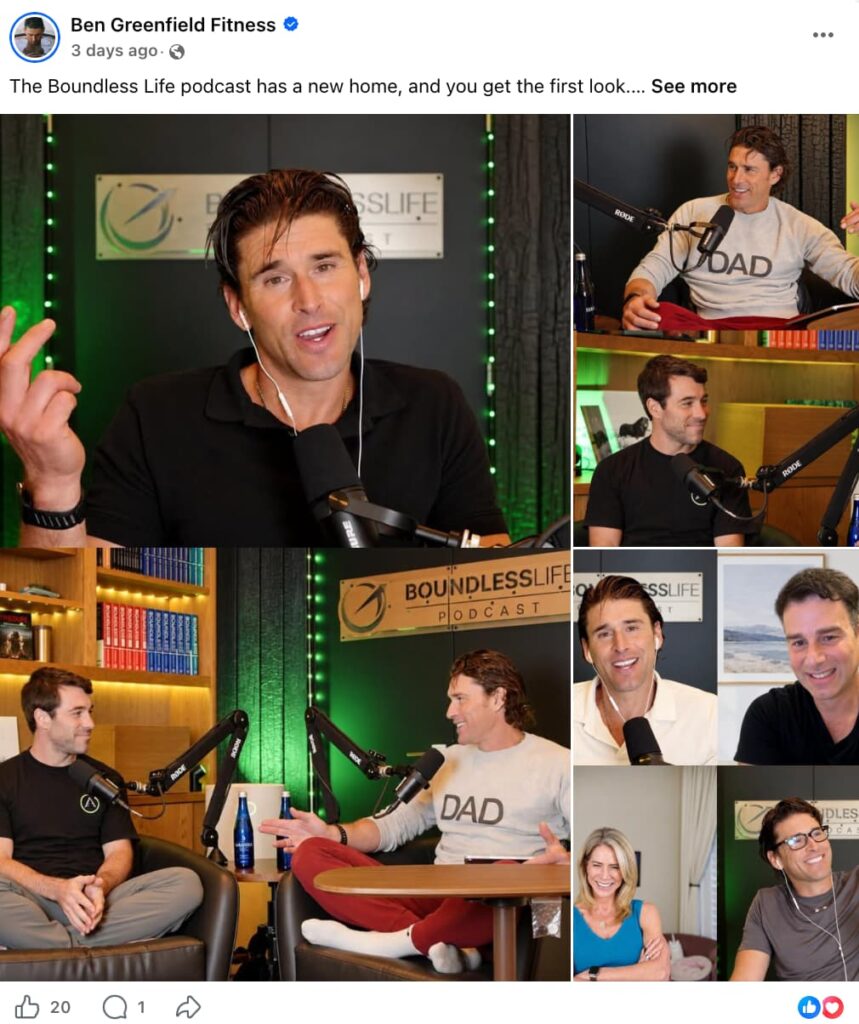
This Week’s Most Popular Facebook Post:
Cheers,
Ben