
Welcome to Ben Greenfield’s Weekly Roundup!
In this weekly post, I share with you my most interesting discoveries of the week, including the latest news on the fronts of fitness, nutrition, health, wellness, biohacking, and anti-aging research. I also recap my upcoming events and special announcements so you can keep up with opportunities to learn, giveaways, discounts, and more!
New Discoveries
Lifting Light? *Here’s* How Close to Failure You Really Need to Get 🏋️🔥
If you’re training with light weights, or mostly using your own body weight, you can absolutely build muscle.
But there’s a catch…
Research comparing low-load training performed to failure versus stopping well short of failure found greater muscle growth when the lighter sets were pushed *all the way* to failure.
In one eight-week study, participants trained with either low or high loads, with sets performed either to failure or short of it. With the lighter loads, going to failure produced significantly greater hypertrophy (increase in the size of muscle fibers). With heavier loads, however, reaching absolute failure wasn’t necessary to achieve similar muscle growth.
But don’t take that to mean every set needs to end with you physically incapable of completing another rep.
Another study compared people who performed lightweight sets to failure with those who stopped once their reps slowed by about 20%—a sign that the muscles were fatigued and approaching failure. Even though the second group didn’t push to complete failure, both groups performed the same overall amount of work. After eight weeks, they experienced similar gains in muscle size and strength.
Failure itself doesn’t appear to be some magical muscle-building switch. What matters more is accumulating enough high-effort reps close to failure.
If you’re lifting relatively heavy, you can usually leave a few reps in the tank. But as the weight gets lighter, getting closer to failure becomes increasingly important, since those last hard reps are what force your muscles to work at their hardest, which is what actually stimulates growth.
And yes, even one hard set taken to failure can stimulate muscle growth, making minimalist training far better than doing nothing. But don’t mistake the minimum effective dose for the optimal dose: on average, multiple hard sets still tend to produce more hypertrophy, although you get diminishing returns as you continue piling on volume.
So if you’re traveling, short on time, or working out at home, don’t assume you need a fully equipped gym. Make those lighter sets count, and remember that the last few difficult reps generally have the biggest payoff.
Interested in learning more about minimalist workouts, supersets, myo-reps, and other strategies for getting stronger and building muscle more efficiently? You can check out my related resources below:
Want My Best Routines, Protocols & Biohacks *Without* Needing to Dig Through Podcast Episodes? Start Here ➡️
I love sharing deep-dive conversations, expert interviews, and episodes of the Boundless Life podcast on my Ben Greenfield Life YouTube channel… and that’s not changing.
But if you’re looking for faster, easier access to the routines, protocols, and practical health strategies I use, I’ve created a separate YouTube channel specifically for that (you can check out the latest video below).
Think of it as the educational, actionable side of my content. You’ll find:
- Step-by-step routines and protocols you can quickly put into practice
- Science-backed strategies for fitness, nutrition, recovery, longevity, and biohacking
- My favorite health and performance hacks and experiments
- Behind-the-scenes looks at what I’m personally testing and using
- Vlogs, travel, day-in-the-life content, and more
Meanwhile, the Ben Greenfield Life YouTube channel will remain the home for my long-form podcast content and conversations.
So if you want to skip straight to the tactics, subscribe to my new YouTube channel here, turn on notifications, and let me know in the comments what you’d like me to cover next.
*Here’s* How to Join My Family & Me in Austin Tonight for the Boundless Premiere + How to Stream the Film Soon 🍿 🎬
Tonight, my family and I are celebrating Boundless: The Man Who Became Human with another Boundless Live event at the Alamo Drafthouse Cinema South Lamar in Austin. And there’s more to celebrate: the film is now available to pre-order on Apple TV, with the full streaming release coming *this* September.
If you’ve been following this project, you know Boundless isn’t just a typical film about biohacking, longevity, or pushing the limits of human performance.
It’s about what I discovered after years of doing exactly that—and why faith, family, relationships, purpose, and ultimately the soul became far more important than another biomarker or optimization hack.
A new review from David’s Guide captures this evolution, describing my transition from “the ‘icon’ of biohacking to a man focused on character and purpose,” inviting the world to “do the same—to stop merely ‘hacking’ life and start truly living it.”
If you’re in Austin, you’re invited to experience the film with my family and me in person. Tonight, we’ll watch Boundless together, followed by a live recording of the Boundless Life podcast and an open Q&A.
If you want to make a full night of it, upgrade to a VIP ticket and join us afterward at Devil May Care Lounge, an intimate underground space where we’ll gather over Mediterranean-inspired small plates made without seed oils or refined sugars.
You can get your tickets for tonight’s Austin event here.
Can’t make it to Austin? No problem. You can now pre-order Boundless on Apple TV (and on Prime Video soon!).
If you’ve seen the film already, I’d love for you to drop a comment below and let me know what you thought!
This Week in Health & Performance: What the Latest Research Says
🏋️♂️💪 Weight Training Wins for Fighting Age-Related Strength Loss: Weight training, aerobic exercise, mixed exercise, whole-body electrical muscle stimulation, diet, supplements, acupuncture—which works best for preserving strength and fighting obesity as you age? According to a recent analysis, resistance training came out on top. The sweet spot? Roughly one-hour sessions, 2–3 times per week. Yet another reason maintaining muscle should be a cornerstone of your longevity strategy (full study here).
😴🌿 Melatonin + Ashwagandha May Be Better Together: If you already use melatonin or ashwagandha for sleep, new research suggests combining the two may work better than taking either one alone. The combination improved sleep-related outcomes beyond the individual supplements, suggesting there could be a synergistic effect when you pair melatonin’s role in sleep-wake signaling with ashwagandha’s stress-supporting properties (full study here).
🎨🧬 Want To Age More Slowly? Make Time For Art: Engaging with the arts, whether that’s dancing, singing, playing music, painting, or other creative activities, seems to be associated with slower biological aging. Researchers in one recent study found links between arts engagement and epigenetic markers associated with healthier aging, adding to evidence that your hobbies and creative life can contribute to longevity (read more here).
☕🩸 Using BFR? Caffeine + Nitrates May Give You an Edge: If you’re doing blood flow restriction (BFR) training, new research suggests two familiar performance aids, caffeine and dietary nitrate, could help you squeeze out more high-rep work before fatigue sets in. This could be especially useful when you’re using BFR for muscular endurance or higher-repetition training, where the goal is accumulating quality work despite using relatively light loads (read the full study).
Key Takeaway: Lift weights a few times per week to help preserve strength as you age, consider how complementary sleep-support tools may work together, don’t underestimate the health value of creative pursuits, and if you’re experimenting with BFR, strategic caffeine and nitrate intake may help you get more out of your higher-rep sessions.
Want to dive deeper? Click the links above to explore the research, and click here to follow me on X for all the latest health and performance news hot off the press!
Product Of The Week
::: Give Your Nervous System a Post-Summer Reset—Save $30 on Truvaga 🧠⚡:::
Summer asks a lot of your body. Now it’s time to give some of it back.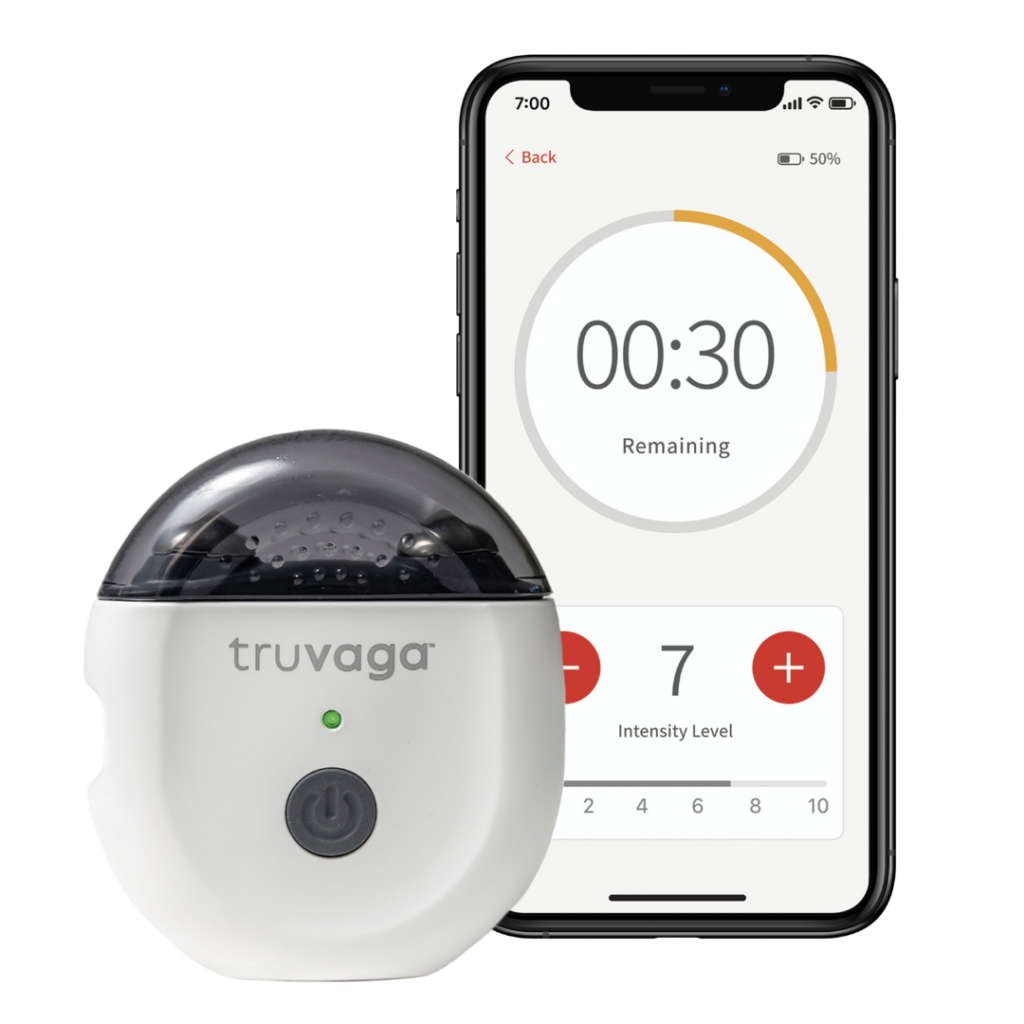
Late nights, travel, heat, packed schedules, and disrupted sleep can leave you feeling like you’re starting fall with a recovery debt. One way I’ve been supporting the transition back to a more balanced routine is through vagus nerve stimulation.
Truvaga delivers gentle, non-invasive vagus nerve stimulation (VNS) in just two minutes. It’s designed to activate the parasympathetic—or “rest and digest”—side of your nervous system and help your body shift out of stress mode and into a calmer, more restorative state.
Rather than adding another pill or complicated recovery protocol, you place the handheld device against your neck and use it for two minutes, twice a day.
Supporting healthy vagal activity can help promote relaxation, sleep quality, and healthy heart rate variability (HRV)—all useful indicators that your nervous system is becoming more resilient rather than simply pushing through another busy day.
If you want to help your nervous system recover from a busy summer and head into fall feeling calmer, more rested, and ready for what’s next, I recommend giving it a try.
You can save $30 on Truvaga with code GREENFIELD30 here.
Podcasts I Recorded This Week:
From Cocaine Dealing & Prison Workouts To The #1 Health Podcast In The World, With Dylan Gemelli

This 56-Year-Old Mom Is Reversing Aging Faster Than Pro Biohackers On $106 A Month!
The Latest Content I Was Featured On This Week:
Ben Greenfield on Anxiety, Longevity & the Limits of Biohacking | STATE OF MIND with MAURICE BENARD
The Dark Side of Biohacking Nobody Warns You About | Ben Greenfield
Boundless: The Man Who Became Human – A Review of the Soul Behind the Science
My Article Feed:
My full article feed and all archives of my articles are here.
This Week’s Most Popular Instagram Post:
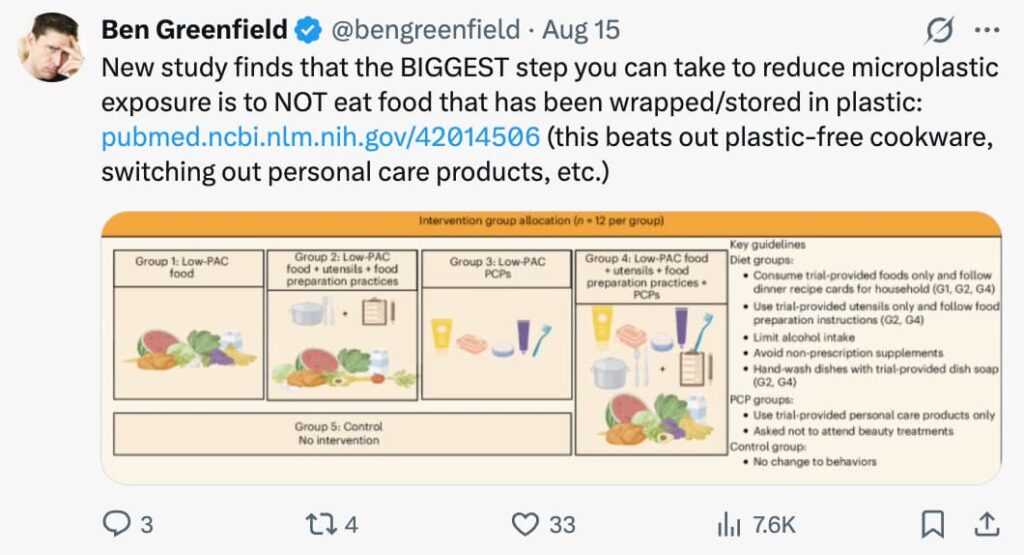
This Week’s Most Popular Tweet:
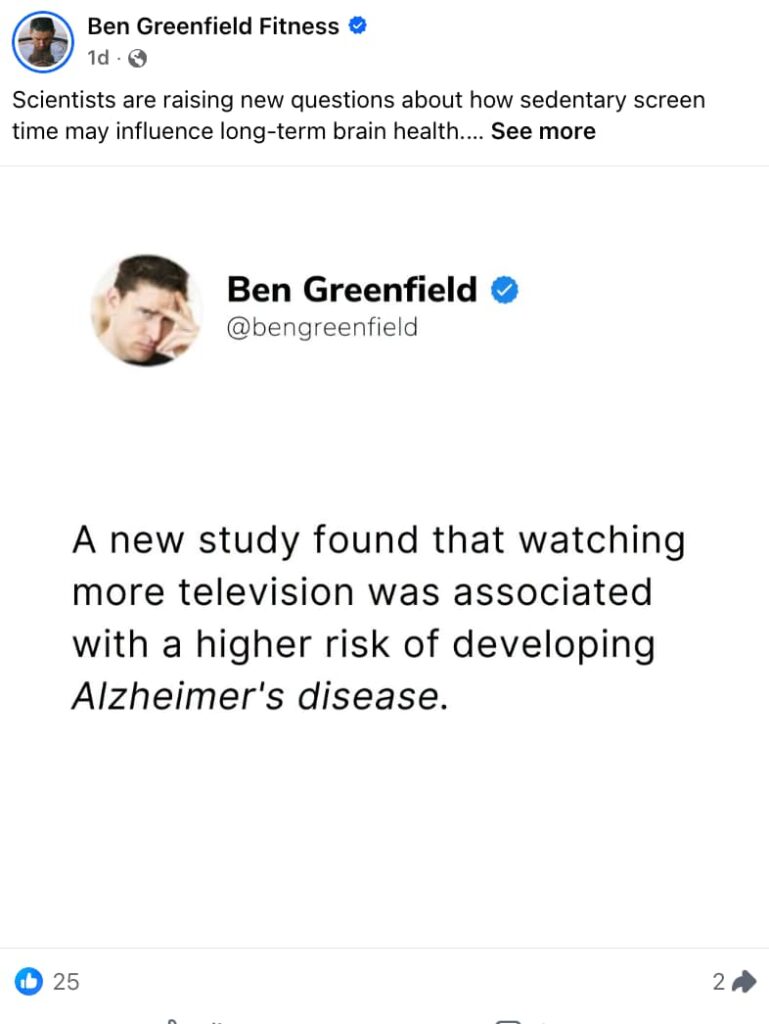
This Week’s Most Popular Facebook Post:
Cheers,
Ben