
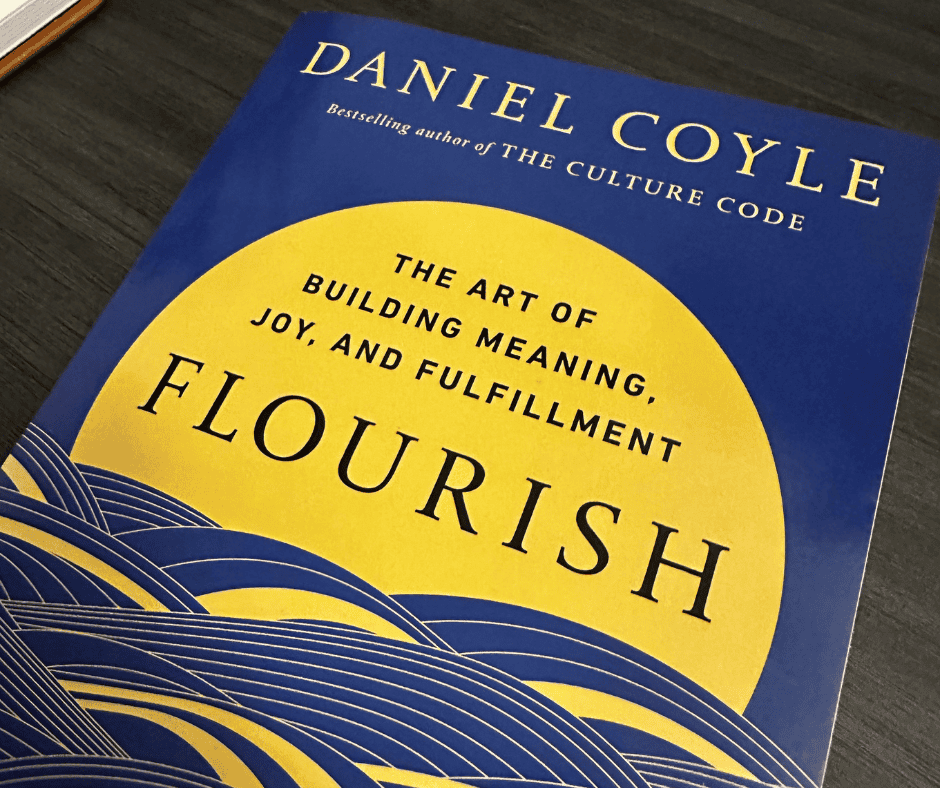
We live in a world that rewards output.
Metrics. Growth curves. Quarterly targets. Personal bests. Optimized routines. Even our rest gets quantified.
Performance isn’t just encouraged — it’s expected.
And yet performance alone doesn’t guarantee fulfillment. You can hit your numbers and still feel disconnected. You can “win” and still feel hollow. And you can optimize your calendar and still feel out of alignment.
That tension is what I explored in my latest conversation with Daniel Coyle.
Daniel has spent years studying high-performing organizations — from elite sports teams to special operations units to world-class businesses. But in his newest work, he turns toward something deeper than performance: flourishing.
Not happiness. Not success. Flourishing.
He defines it as joyful, meaningful growth. And that definition quietly reframes everything.
Because flourishing isn’t something you extract from a system. It’s something you cultivate within one.
We talked about why life isn’t a machine to optimize or a game to win, but a garden to tend. Machines break. Games end. Gardens require care, patience, interdependence, and acceptance of imperfection.
That metaphor matters.
The Cost of Treating Life Like a Machine
When we treat our careers like machines, we focus on efficiency. When we treat them like gardens, we focus on vitality.
One of the most powerful ideas in our conversation was what Daniel calls “awakening cues” — deliberate pauses that interrupt the rush of performance and force us to ask: What actually matters here?
Those pauses aren’t indulgent. They’re stabilizing.
In performance-driven environments, the instinct is to answer faster. To fix quicker. To move immediately. But flourishing requires something different: relational attention. The discipline of asking better questions. The humility to wait. The courage to slow down.
Flourishing doesn’t reject performance. It reframes it.
Performance becomes an expression of alignment rather than a substitute for it.
As someone who has spent decades exploring productivity and productiveness, I find this shift significant. Productivity is about producing. Productiveness is about being aligned while you do it. Flourishing lives closer to the latter.
In a world obsessed with performance, perhaps the real edge isn’t speed.
Perhaps it’s depth.