

Note: The point below includes discussion of disordered eating and an unhealthy relationship with exercise. Please take care while reading if these topics are sensitive for you.
When I was in my twenties, I worked out a lot. I ran several days a week, pushing myself to be a little faster every time. I not only took several high-intensity yoga classes each week, but my own home practices were much the same. Although I did belong to a gym when I was in my early twenties living in NYC, I mostly used the cardio equipment — the treadmill, the elliptical machine, and the stairmaster once when it was the only thing available. I generally avoided the weight machines at the gym because I felt silly trying to use them and didn’t want to ask for help.
It occurs to me, as I look back, that none of the exercise I was doing was in service of getting stronger. Instead, I was aiming to get smaller.
This was the mid-to-late 2000s — a time when Jessica Simpson was called “Jumbo Jessica” when she wore high-waisted jeans (she was a size 4), and Tyra Banks told a size 6 model competing on the reality TV show America’s Next Top Model that she was “plus size.”
Clearly my desire to focus on cardio and yoga was partially in response to a cultural ideal of thinness, but I’d already been battling that demon for a long time before Tyra and Jessica came into the picture.
I have always loved moving my body. I started dancing when I was a kid and sometimes did Jane Fonda workouts with my mom. I kept dancing through high school while also joining the volleyball team. I started running in high school, too, partly as a way to relieve stress and partly for the exercise benefits. When I was in college, I discovered yoga and started attending classes regularly.
Underfueling an Active Body
You’d think that because I was incredibly physically active, I ate like an athlete — but I actually did the opposite. While I genuinely enjoyed all of the physical activities I participated in, a big part of my reason for doing them was to be thin.
So I undernourished myself, limiting my calories while pushing my body hard.
And it worked. I did make myself smaller. I also had terrible skin, brittle nails, occasional heart palpitations, and I often felt like I was going to faint. I was ravenous all the time but forced myself to limit my calories, all in the pursuit of thinness.
Postpartum Strength and a Turning Point
The idea of being strong didn’t even occur to me until after I’d given birth the first time. Pre-pregnancy, I thought I was plenty strong. I could run six miles and do a handstand. I could hold yoga poses for what felt like an eternity. But after giving birth, none of that made me feel strong. After growing a human in my body and pushing her into the world, I felt overstretched, wobbly, and sore. Plus, I was constantly hungry because nursing is like a high-endurance sport.
Since yoga and running — my exercise standards — weren’t working for me, I decided to try strength training.
My intro to strength training was through HIIT, so there was still a little cardio involved, but I was using hand weights, too. For the first time ever (or at least since giving birth), I felt powerful.
I also noticed that my low-calorie, high-intensity workout habit wasn’t helping me.
I was ravenous on days that I did HIIT, so I adjusted accordingly, feeding myself more on those days to account for the greater calorie expenditure. I was still limiting calories on my non-HIIT days, so my food consumption was inconsistent and still in the realm of “not super healthy.”
This is a fairly common behavior, by the way, but it’s rooted in diet culture and the idea that you need to earn your calories. The truth was, my body needed a lot more than I was giving it — even on the days I was lifting weights. I wasn’t really thinking about what it would take to fuel my body or build muscle.
But it was an important step on the path to a healthier relationship with food, my body, and exercise.
It took me years to break this cycle. Diet culture is relentless.
Choosing Strength in Midlife
One of the things I realized as I entered my 40s is that I want to be strong as I get older. I don’t want to feel like that cliché of aging where everything starts hurting for no reason and taking Advil every day feels necessary just to function. I also don’t want to spend the rest of my life chasing thinness and wishing my body looked different.
Although I can’t pinpoint the exact moment my relationship with food and exercise shifted, I can say that when I started getting serious about lifting heavy, I realized I needed to change how I eat.
While there are many benefits to lifting heavy, the most important ones to me are building muscle and increasing bone density. Yes, you can do this with moderate weights and higher reps — but it takes longer, and I don’t have hours a day to devote to exercise.
The other piece is that building muscle and bone requires enough food. You can’t skimp on calories if you want to be strong.
It’s also really hard to lift weight heavier than your body if you’re depleted.
Learning to Fuel for Strength
When I started lifting heavy more consistently, I noticed I wasn’t just hungrier on lifting days — I was hungrier all the time.
This felt both natural and scary. Although I’ve done a lot of work around health and body image, I’m still human. I instinctively knew my body needed more food — especially more protein, since I eat a plant-based diet and hadn’t prioritized it. But I was nervous about how eating more might change my body.
We live in a world where people make judgments about your humanity based on what your body looks like — particularly as women. Saying your size doesn’t determine your health or strength is easier than living it.
In the end, the desire to be strong won over the fear. And it continues to guide me.
As someone with a history of disordered eating, I didn’t want to track macros, weigh food, or calculate protein grams. Instead, I chose to listen to my body and make smart, supportive decisions.
I did start focusing a bit more on protein — but not obsessively. The protein hype is exaggerated. You don’t need protein-spiked popcorn just because a Kardashian says so. But aiming for protein in every meal felt manageable.
Some days I fuel before workouts; other days I don’t. I eat a solid lunch and snack when I’m hungry.
And while there’s still a tiny voice encouraging me to eat less or skip dessert, I almost always ignore it. I say “almost” because I’m human. But I no longer believe I need to earn calories or use exercise to make myself smaller.
Strength, Confidence, and Aging Well
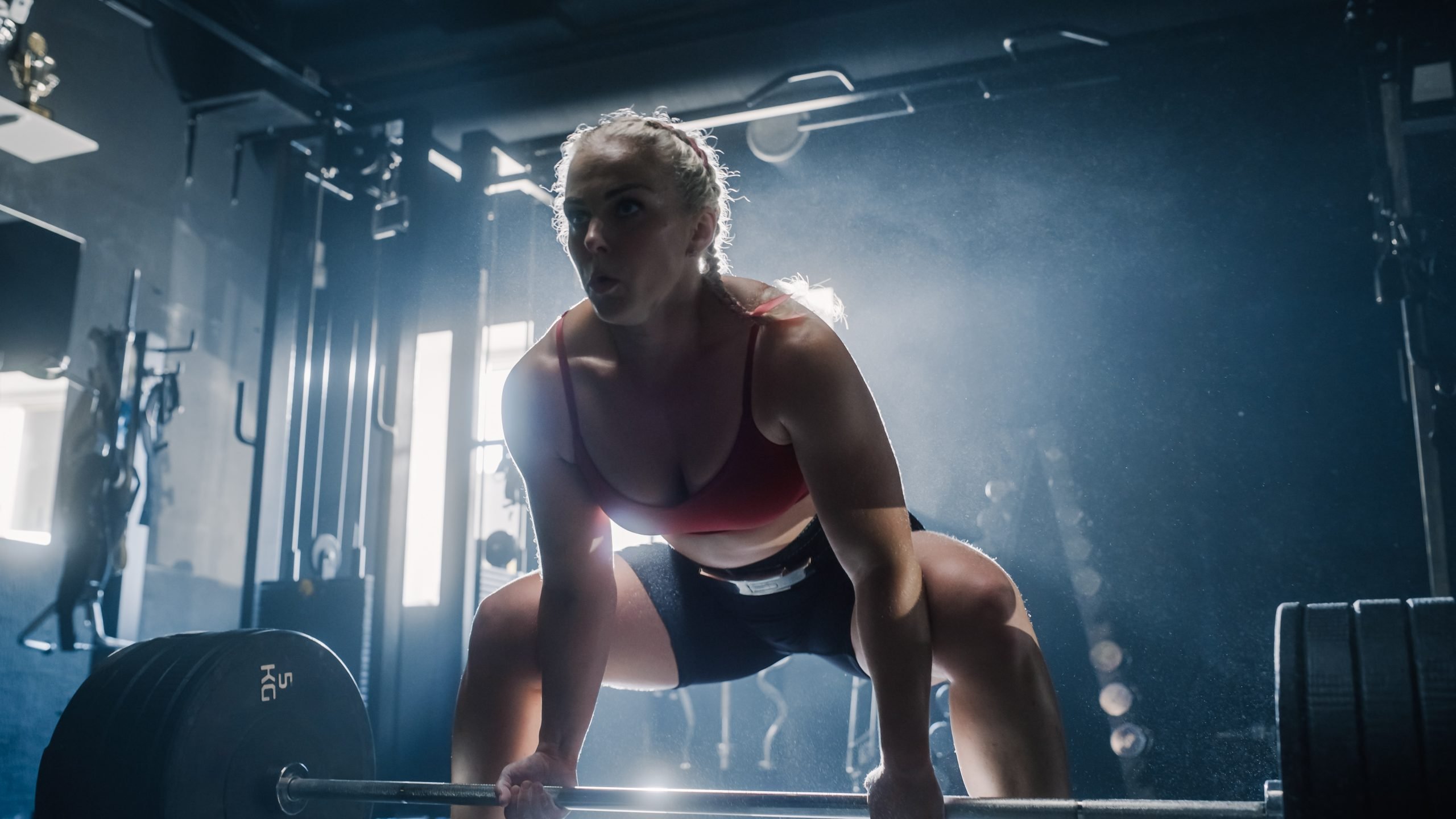
In the year I’ve been working with barbells and lifting heavy, I feel better in my body than ever. I don’t have the same aches and pains as many people my age (I’m 44). I take three dance classes a week and feel confident dancing with women much younger than me. I am stronger now than I was in my 20s — even after three pregnancies.
I care a lot less about how my body looks because I’m proud of what it can do.
And all of this is because I stopped being afraid of food so I could properly fuel my body to lift heavy shit. —Naomi