
I’ve tested 18+ red light therapy devices with over $3,000 in laboratory-grade instruments. A Hopoocolor spectroradiometer, flicker analyzer, EMF meter, EMI meter, decibel meter, and power meter. All to find the best panels for home use.
Red light therapy is a non-invasive treatment that uses specific wavelengths of red (630-660nm) and near-infrared (810-850nm) light to stimulate cellular energy production, reduce inflammation, and accelerate tissue repair. Thousands of peer-reviewed studies support its use for skin health, muscle recovery, brain function, and more.
Red light therapy has proven benefits ranging from enhanced recovery to hormonal balance to boosting energy. No wonder it’s used by US Special Forces, doctors, and Olympians worldwide.
This guide covers advantages, disadvantages, and which panel you should choose based on independent testing data.
The at-home LED light therapy device market is expanding rapidly, with 2.5M monthly searches and 59% year over year growth. It was valued at ~$1.2B in 2024 and is projected to reach $2.5B by 2033 (CAGR of 8.9%).
Top red light therapy devices recommended by experts in 2026 include the RLT Home TotalSpectrum MAX for full-body coverage, Vital Red Light Vital Charge for portability, Mitolux BTS2 for vitamin D via broad spectrum, and PlatinumLED BioMax panels for proven reliability.
The Mitolux “Better Than Sunshine Sunlamp” offers an innovative angle for addressing vitamin D needs through home therapy, blending wellness & convenience.
A study of 216 users reported a 45.3 % reduction in acne after 4–12 weeks using red and/or blue LED treatments, particularly when paired with other standard acne therapies.
Expert guidance advises 10-20 min per session, once daily or as per device, with built-in timers/shut‑off features promoting safe & convenient use.
Outliyr predicts next-gen light therapy will go beyond red/NIR, combining pulsed output, dynamic multi-wavelength tuning (blue, green, yellow), brain-targeted protocols, and AI-personalized dosing for precision results.
Independently Tested
Nick independently measures devices using a professional light spectrometer, power meter, flicker meter, EMF meter, and dirty electricity meter.
How Do the Best Red Light Therapy Devices Compare?
Before diving into the individual reviews, here’s a quick side-by-side comparison of every device in this roundup. You can sort by any column and filter to find exactly what fits your needs and budget.
If you’re still deciding what to look for, start with the red light therapy buyer’s guide.
How Do I Test & Rank These Devices?
Every device in this guide went through my independent testing protocol. I warm each unit for 15 minutes, then measure irradiance at 12 inches with a calibrated HOPOOCOLOR OHSP350IR spectroradiometer.
I also test flicker with a HPCS330P analyzer and EMF with a Cornet ED88T meter. I have spent over $3,000 on testing equipment to verify what brands claim versus what they actually deliver.
Irradiance alone does not tell the full story. I record the complete spectral output using a calibrated HOPOOCOLOR OHSP350IR so you can see exactly which wavelengths each device produces and at what intensity.
Some panels advertise “5 wavelengths” but my spectrometer data shows negligible output on two of them. Others quietly outperform their marketing claims.
I also evaluate build quality, thermal management, and real-world usability. Some panels overheat after 20 minutes of continuous use, throttling their output below the advertised spec.
Others produce audible fan noise that makes them impractical for meditation or sleep routines. These details rarely appear on spec sheets but make a significant difference in whether you actually use the device consistently.
See the full testing methodology for my exact protocol, equipment specs, and calibration notes. You can also browse the raw spectral data for every device in the device comparison database.
How Do You Choose the Right Red Light Therapy Category?
Choosing the right device starts with your primary goal:
- Full-body panels deliver the highest total energy per session. Treat your entire torso in one standing position. Most time-efficient for general wellness and recovery.
- Portable devices trade raw power for convenience. Ideal for travel, targeting specific joints, or using at your desk. Many deliver 40-100 mW/cm2 directly against skin.
- Brain-focused transcranial devices use near-infrared (810nm or 1070nm) pulsed at specific frequencies to reach neural tissue through the skull. Separate category from body panels.
- Broad spectrum lamps combine red, NIR, and UVB wavelengths. Address vitamin D production without a separate lamp.
- Budget panels in the $200-600 range deliver therapeutic irradiance. The key metric is verified output per dollar at your treatment distance.
Starting from zero? A full-body panel gives you the widest range of benefits. Add a portable or brain device once you have a consistent daily protocol. For a breakdown of which wavelengths target which tissues, see the complete benefits guide.
What Is the Best Full-Body Red Light Therapy Panel?
The top full-body panels deliver 80+ mW/cm2 of verified output at 12 inches treatment distance.
RLT Home TotalSpectrum MAX: Best full-body panel
BEST FULL-BODY
Best For
- You want a powerful multi-wavelength full-body panel
- You prioritize 7-band coverage including blue (480nm) for skin health
- You want FDA/CE/RoHS certified clinical-grade hardware
Skip If
- You need a budget-friendly entry point under $1,000
- You want a compact or portable device
- You prefer a simpler panel without multi-band complexity
Pros
- 360 LEDs across 7 wavelengths
- Includes 480nm blue for skin and circadian benefits
- FDA/CE/RoHS certified
- 60-day trial + 3-year warranty
Cons
- Premium price point
- Only available direct from manufacturer
Price$1,995
Use code URBAN for 6% off
The TotalSpectrum MAX packs 360 LEDs across 7 wavelengths into a single panel. Most competitors max out at 5. That extra range includes a 480nm blue band for acne and circadian rhythm support, wavelengths the majority of panels skip entirely.
I use this one for full-body sessions. At 12 inches, it delivers consistent irradiance across the entire treatment area without hot spots or dead zones. The build quality feels clinical grade. FDA, CE, and RoHS certified with a 60-day trial and 3-year warranty backing it up.
The main limitation is size and commitment. This is a wall-mounted unit designed for a dedicated treatment space. If you don’t have room for that setup, check the portable picks below. For the complete comparison with spectrometer data, see the full-body panel rankings.
What Is the Best Portable Red Light Therapy Device?
Portable red light therapy devices trade full-body coverage for targeted precision and travel-friendliness. The best wearables deliver 40-100 mW/cm2 directly against skin for deeper tissue penetration, and many now include pulsing modes backed by clinical research.
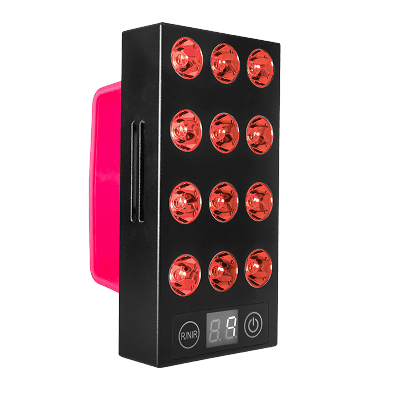
Vital Red Light Vital Charge: Best portable red light
BEST PORTABLE
Best For
- You want a portable red light device for travel or on-the-go use
- You need targeted treatment for face, joints, or small areas
- You want an affordable entry point into red light therapy
Skip If
- You need full-body red light coverage
- You want a panel you can mount on a wall or door
- You prioritize maximum irradiance for deep tissue penetration
Pros
- Truly portable with rechargeable battery lasting 4+ hours
- Four wavelengths (630, 660, 830, 850nm) in a handheld form factor
- Zero EMF output for safe close-range use
- Non-flicker LEDs
- Affordable entry point at $299
- 10-minute auto shut-off timer prevents overuse
Cons
- Only 12 LEDs limits treatment area to targeted spots
- Not suitable for full-body sessions
- Heavier than a phone at 2.2 lbs despite portable branding
- 1-year warranty is shorter than competitors
Price$299
Use code URBAN for 11% off
The Vital Charge runs four wavelengths: 630, 660, 830, and 850nm. That covers both red and near-infrared bands, the two ranges with the deepest clinical evidence for skin and tissue repair. Battery lasts 4+ hours on a single charge. That’s a full week of 10-minute daily sessions without plugging in.
Zero EMF output at treatment distance sets it apart from most plug-in devices. That matters for close-range face and joint applications where you’re holding the unit directly against skin. Most corded panels spike EMF readings once you get within 6 inches.
At $299, it’s the lowest entry point for a multi-wavelength device from a reputable brand. You won’t get full-body coverage, but you get targeted treatment for joints, face, or injuries without committing to a $500+ wall panel. See the complete portable device rankings with testing data.
What Is the Best Red Light Therapy Device for Brain Health?
Transcranial photobiomodulation (tPBM) is one of the fastest-growing applications of light therapy. The best brain-targeted devices use 810nm or 1070nm wavelengths that penetrate deep enough to reach cortical tissue, paired with precise pulsing protocols that entrain specific brainwave states.
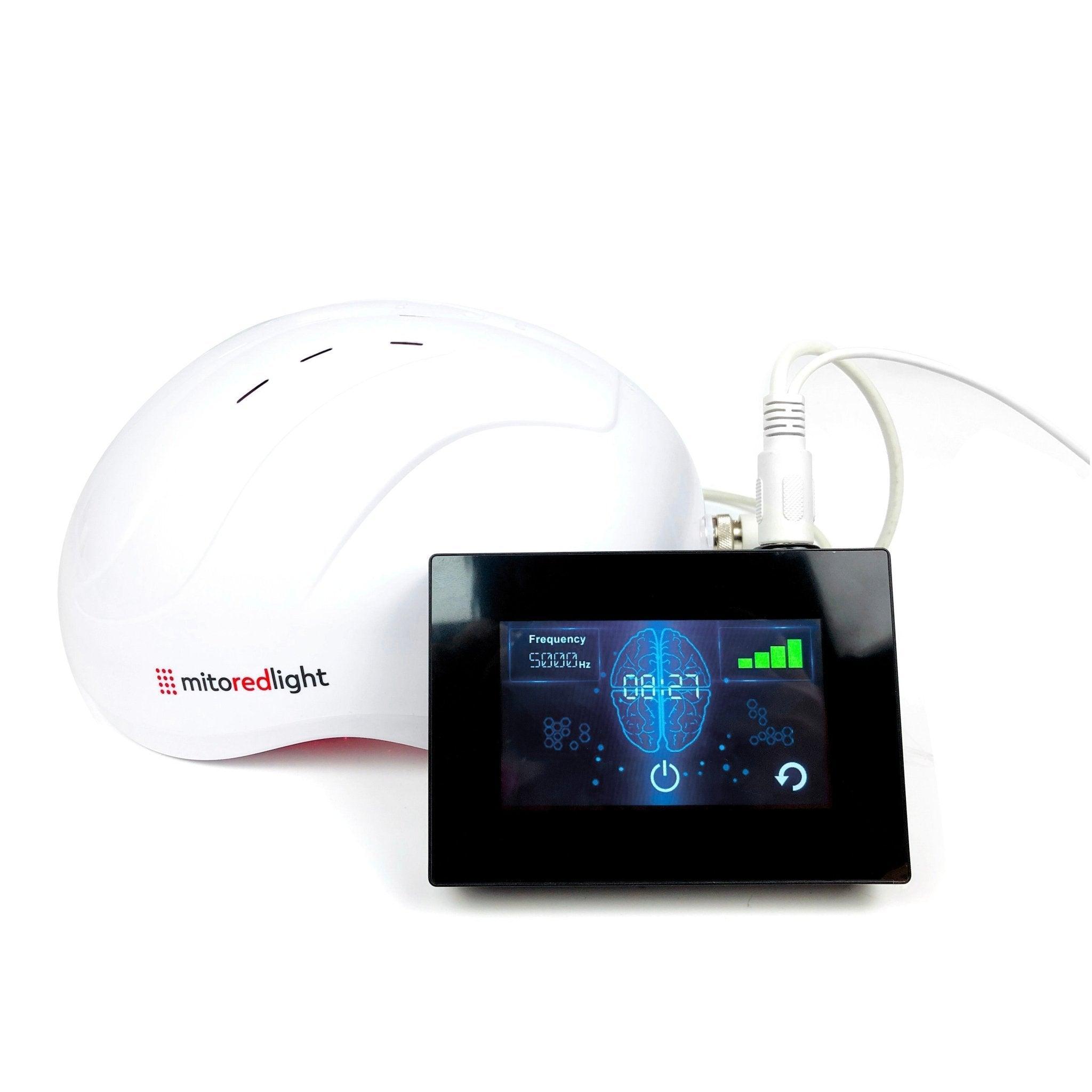
MitoMIND: Best brain photobiomodulation device
BEST BRAIN PBM
Best For
- Best value 810nm brain PBM with adjustable frequency presets
Skip If
- You want the most research-backed device (Vielight has 25+ studies)
- You need proven through-skull irradiance data
Pros
- 6 preset brain entrainment programs (0-40Hz)
- Manual mode up to 20,000Hz
- 810nm wavelength backed by most clinical evidence
- Optional 1070nm intranasal add-on ($200)
- Less expensive than Vielight Neuro Duo
Cons
- No device-specific clinical studies yet
- Independent testing measured 7-10 mW/cm² vs advertised 14 mW/cm²
- No through-skull irradiance data published
Price$2,195
The MitoMIND runs at 810nm, the most clinically studied wavelength for transcranial photobiomodulation. It ships with 6 preset entrainment programs spanning 0 to 40Hz. That covers everything from delta (deep recovery) to gamma (focused cognition). Manual mode pushes up to 20,000Hz for advanced pulsing protocols.
What makes it stand out: adjustable frequency control at a price point well below the Vielight Neuro Duo, which has dominated this category for years. The optional 1070nm intranasal clip targets deeper neural tissue through a thinner entry point than the skull.
Brain PBM is still an emerging field. Most studies use small sample sizes and optimal dosing protocols aren’t fully settled. But the existing research on 810nm for neuroprotection and cognitive performance is the strongest of any single wavelength. See the complete transcranial PBM rankings.
What Is the Best Broad Spectrum Light Therapy Device?
Most panels focus exclusively on red and near-infrared wavelengths. A newer category combines those with UVB for vitamin D synthesis, eliminating the need for a separate lamp.
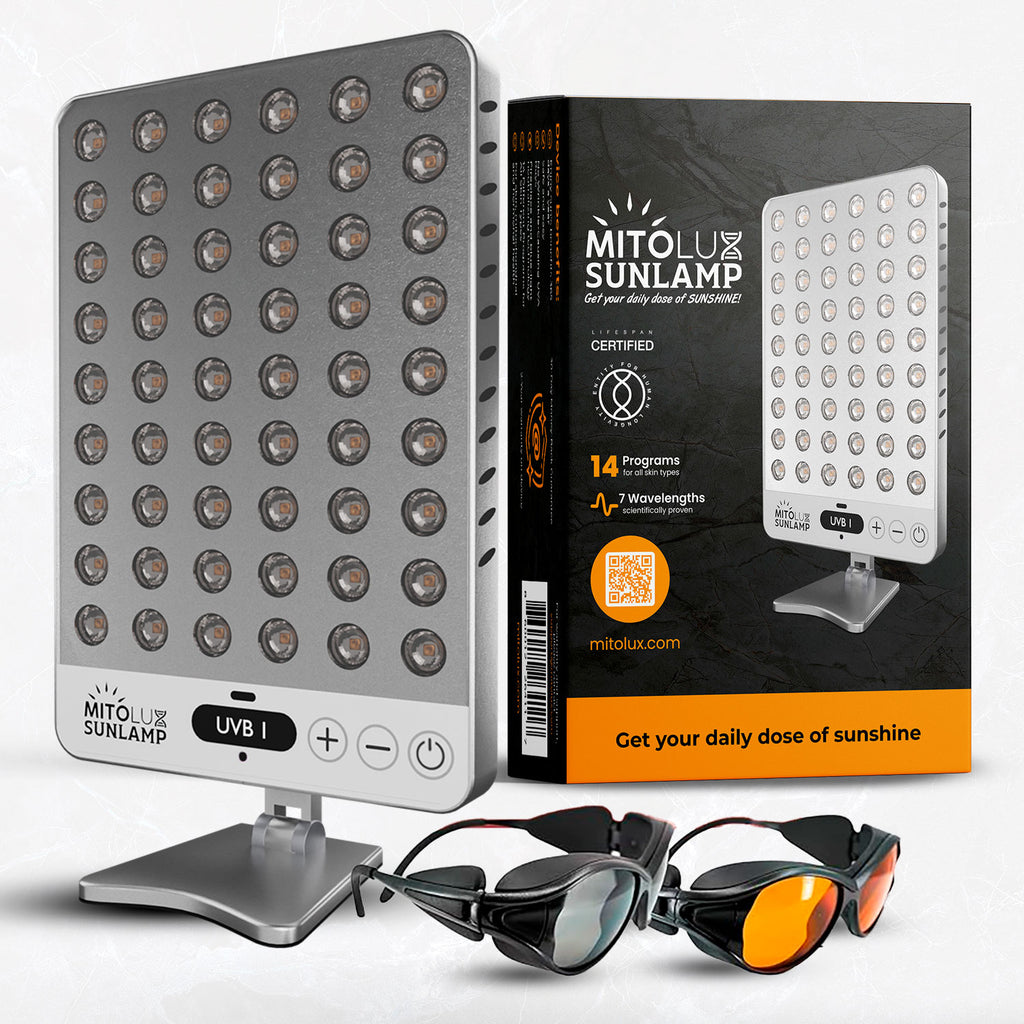
Mitolux BTS2: Best broad spectrum panel with vitamin D
BEST BROAD SPECTRUM
Best For
- You want light therapy that goes beyond just red and NIR wavelengths
- You’re looking for a compact panel that’s travel-friendly
- You want UV exposure indoors without actual sun access
Skip If
- You want a large full-body panel for whole-body treatment
- You don’t want to deal with wearing UV protective eyewear
- You’re on a tight budget (premium pricing for the size)
Pros
- Combines red, near-infrared, and full-spectrum wavelengths in one device
- Includes UV spectrum that most panels skip
- Built-in stand for easy desk or floor positioning
- Low-flicker and low-EMF design
- Compact enough for travel
Cons
- Premium price point for the size
- UV output means you need protective eyewear
- Smaller treatment area than full-size panels
Price$699
Use code URBAN for 10% off
The BTS2 is the only panel on the market combining red, near-infrared, and UVB wavelengths in one device. That UVB band lets you address vitamin D production without buying a separate lamp. If you live somewhere with limited sun exposure or spend most of your day indoors, that’s a significant practical advantage.
I use this one daily. The compact form factor fits on a desk or floor, which makes it easy to integrate into a morning routine without dedicating wall space. Spectrometer testing confirms low-flicker and low-EMF output across all wavelength modes.
The tradeoff: it’s not a full-body panel. You’re treating one area at a time. If systemic coverage matters more than vitamin D, the TotalSpectrum MAX above is a better fit. For the full spectral breakdown including UVB measurements, see the Mitolux BTS2 review.
What Is the Best Budget Red Light Therapy Device?
You don’t need to spend $1,000+ to get effective red light therapy at home. Spectrometer testing shows several panels in the $200-400 range deliver therapeutic irradiance levels comparable to devices costing twice as much. The key metric is irradiance per dollar: divide the verified output at your treatment distance by the price.
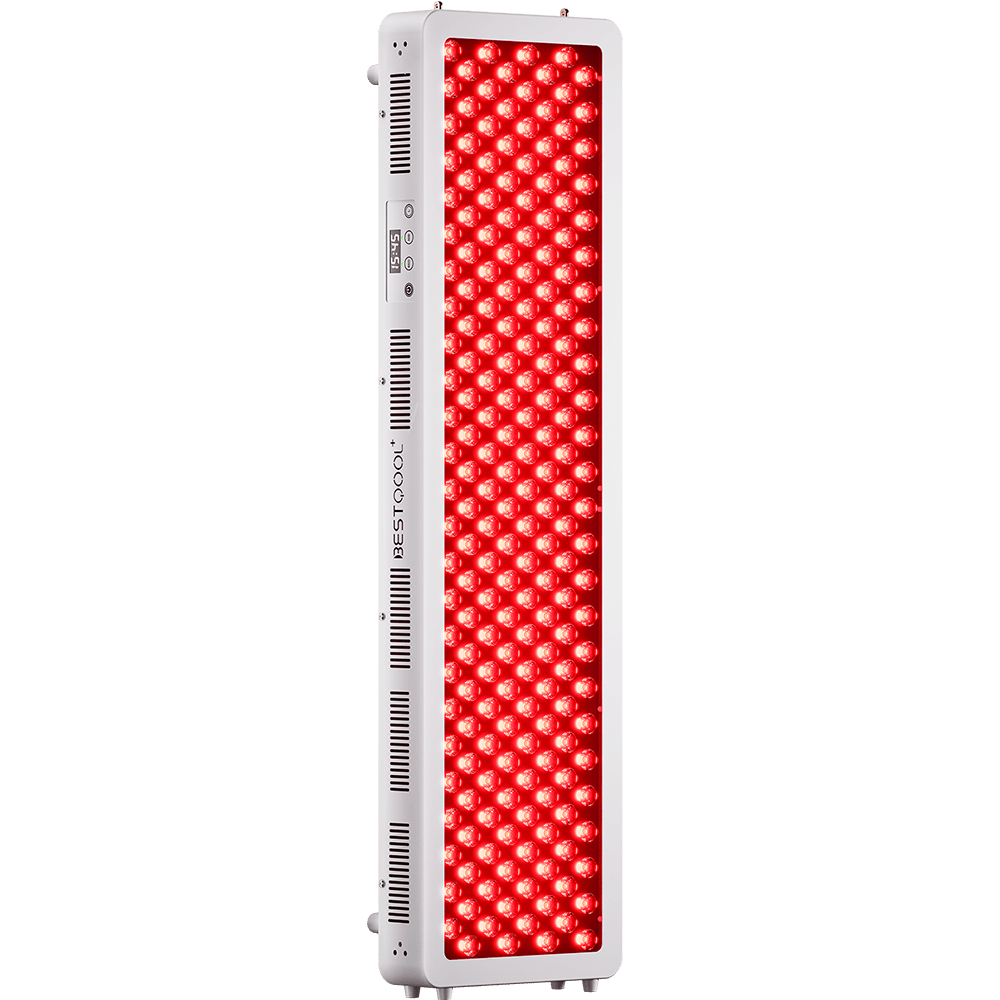
Bestqool Pro200: Best budget red light therapy panel
BEST BUDGET
Best For
- Budget-conscious buyers wanting full-body red light coverage without premium pricing
Skip If
- You want multi-wavelength (7-band) coverage, pulsing modes, or premium build quality
Pros
- Full-body coverage at $589
- 200 dual-chip clinical grade LEDs
- Modular and expandable system
- Built-in cooling fans and digital timer
Cons
- Limited wavelength selection vs premium 7-band panels
- No pulsing modes
- Less established brand than PlatinumLED or Mito Red
Price$589
Use code URBAN for 10% off
At $589, the Pro200 delivers full-body red and near-infrared coverage with 200 dual-chip LEDs. That puts it at roughly half the price of premium 5+ wavelength panels while still covering the two wavelengths (660nm red, 850nm NIR) with the most clinical evidence behind them.
The modular design lets you daisy-chain multiple units for wider coverage as your budget grows. Built-in cooling fans and a digital timer keep sessions straightforward. No app required. Plug in, set your time, stand in front of it.
You’re giving up multi-band wavelength options that premium panels offer. For most people running basic recovery and skin health protocols, 660nm and 850nm cover the majority of documented benefits. Spend consistently on a quality mid-range panel rather than saving up for premium features you might not need. See the complete budget panel rankings.
How to Get Great Red Light Therapy Deals
Panels from brands like Hooga and Bestqool consistently punch above their weight class on this metric. Avoid devices under $100 from unknown brands on Amazon. They typically use lower-quality LED bins, lack safety certifications, and their irradiance claims almost never hold up under spectrometer testing.
The best strategy is buying a quality mid-range panel and using it consistently rather than overspending on premium features most home users don’t need.
Browse Reddit for popular Alibaba brands. Choose one and start by asking the vendor questions:
- What is the beam angle? 30-or 60-degree beam angles are optimal.
- What is the irradiance across the entire body? Should be between 15mW/cm^2 and 150mW/cm^2. It should be third-party verified.
- How was irradiance tested? A professional spectroradiometer gives lab-grade measurements. Solar power meters give inflated numbers. Ask manufacturers for spectroradiometer-verified output data.
- Have the panels been third-party tested for EMF? If so, ask for the test results.
- What is the rated power and true wall draw (in Watts)? Verify the device should be as powerful as claimed.
Next, you’ll want your own equipment to verify the manufacturer’s answers once your panel arrives:
- A professional light spectrometer to measure irradiance at the distance you intend to use the panel. If you don’t own one, borrow from a friend or local biohacking community. Solar power meters give inflated numbers and are not reliable for comparing devices.
- Cornet ED-88TPlus [Amazon] to measure electrosmog output. If the device produces high EMFs, it may do more harm than good.
I like to see an irradiance of at least 50mW/cm^2 across my entire body, at 12″. And minimal EMF output (especially magnetic fields).
Also, check out the red light therapy flicker guide to learn more about real biological consequences of getting a low quality panel.
Overall, the above meters you’d need have other uses as well. But unless you can get them at discounts, the cost savings and difficulty of DIY importation from China aren’t worth the headaches.
I am also building dedicated guides for budget red light therapy devices and red light therapy for joint pain. These focus on the specific metrics that matter most for each use case, from cost-per-milliwatt to joint-penetrating wavelength ratios.
Red Light Therapy Device Questions & Answers
What irradiance should a home red light panel deliver for the best results?
Studies often use 60-100 mW/cm² measured at ~6 inches for skin-level benefits. Premium 2026 panels emit 140-160 mW/cm² to shorten sessions or reach deeper tissue. Anything above 200 mW/cm² offers diminishing returns unless you increase distance. Few panels irradiant 200+ mW/cm² anyway.
How many joules do I actually need, and how do I calculate red light dose?
Calculate dose (J/cm²) by multiplying time (seconds) by irradiance (mW/cm²) and then divide by 1,000. Aim for:
- Skin: 2-10 J/cm²
- Muscles & joints: 10-40 J/cm²
- Bone healing / fractures: 1-45 J/cm² (studies mostly use ~5-20 J/cm²)
- Brain health: 1-537 J/cm² (typically 3-60 J/cm² per site)
- Hair growth: 10-20 J/cm² (often at 630-660nm)
- Wound healing: 1-8 J/cm²
- Performance/endurance & recovery: ~60 J/cm²
Example: 100 mW/cm² × 120 s ÷ 1,000 = 12 J/cm², ideal for tendon rehab.
Is pulsed red light therapy better than continuous wave?
Yes, pulsing (ie 10 Hz) lets LEDs deliver higher peak power without extra heat, which enhances mitochondrial signaling in nerve tissue. For skin health, continuous wave performs equally well in head-to-head trials, so choose pulsing mainly for neuro or pain protocols. Nick’s testing with EEG sensors shows that pulsing light can indeed entrain particular brain wave states (ie alpha or gamma).
Do I need a multi-wavelength panel (630 nm + 660 nm + 810-850 nm) for the best full-body results?
Yes, dual red (630-660 nm) targets skin and collagen, while near-infrared (810-850 nm) penetrates muscle and fascia. Most panels offer at least one red wavelength and one near infrared wavelength. Newer technology “Generation 5” panels allow independent control of each band for customized treatments.
What’s the difference between ‘FDA-cleared’ and ‘FDA-approved’ red light devices?
Consumer panels can only be FDA-cleared (Class II, 510(k) pathway) by proving “substantial equivalence” to an existing device. FDA-approved applies to high-risk Class III hardware, which no at-home red light panel currently meets. Marketers touting “FDA approval” are mislabeling. Class III FDA-approved lasers require a license to operate.
How deep can red and near-infrared light penetrate, and is it enough for muscle or brain?
Red light reaches roughly 2-5mm of tissue. Near-infrared can penetrate 20-40mm, enough for muscle fascia. With high-power 810 nm lasers, <3% of surface energy can still reach 30 mm, appropriate for targeted brain PBM, but LEDs require longer sessions.
Should I choose a wearable device or a full-body red light therapy panel for my goals?
Buy a full-body panel for systemic benefits like hormone balance, energy, or recovery; you’ll treat the entire torso in <10 minutes. Choose wearables (wraps, flex panels, devices) for travel, joint rehab, injury recovery, or spot pain. They deliver focused light and are FDA-cleared for localized relief.
Which Red Light Therapy Device Should You Choose?
Red light is a powerful growth, healing, and regenerative stimulus. Each category serves a different need: full-body panels for systemic benefits, portable devices for targeted recovery, transcranial systems for brain health, and broad spectrum lamps for vitamin D. My current daily driver is the Mitolux BTS2 for its unmatched versatility, with the RLT Home TotalSpectrum MAX for dedicated full-body sessions.
The technology is evolving fast. Newer panels now offer pulsing modes, multi-wavelength control, and app-based dose tracking that did not exist two years ago.
I update this guide and the comparison database every time I test a new device or retest an existing one after firmware updates. If a manufacturer improves (or worsens) their product, the data reflects it.
Red light therapy alone won’t work miracles. Most of the benefits accrue over consistent use.
The sooner you start, the sooner you’ll begin seeing results and feeling your best. Start with the light therapy dosing guide to optimize your sessions from day one.